
Philanthropy 3.0: How Singapore, London, and Dubai Are Rewriting the Rules of Giving
The era of the charity gala and the bronze plaque is quietly ending. What replaces it is more rigorous, more strategic — and far more interesting.
There is a phrase that has circulated quietly among Singapore’s family office community for several years now, spoken with the slightly evangelistic energy of a conversion: strategic philanthropy. It sounds like a contradiction — giving calibrated with the precision of a deal — and that tension is exactly the point. Because what is emerging across Singapore, London, and Dubai is not simply a shift in how much companies and wealthy individuals give. It is a fundamental restructuring of what giving is for, who does it, and what it is expected to produce.
Call it Philanthropy 3.0. The first version was charity: reactive, anonymous, disconnected from business. The second was CSR: branded, reported, often cosmetic. The third is something different — philanthropy deployed as a form of patient capital, structured with the rigour of private equity, measured against outcomes rather than intentions, and increasingly inseparable from the strategic identity of the institution behind it.
Singapore: The Laboratory
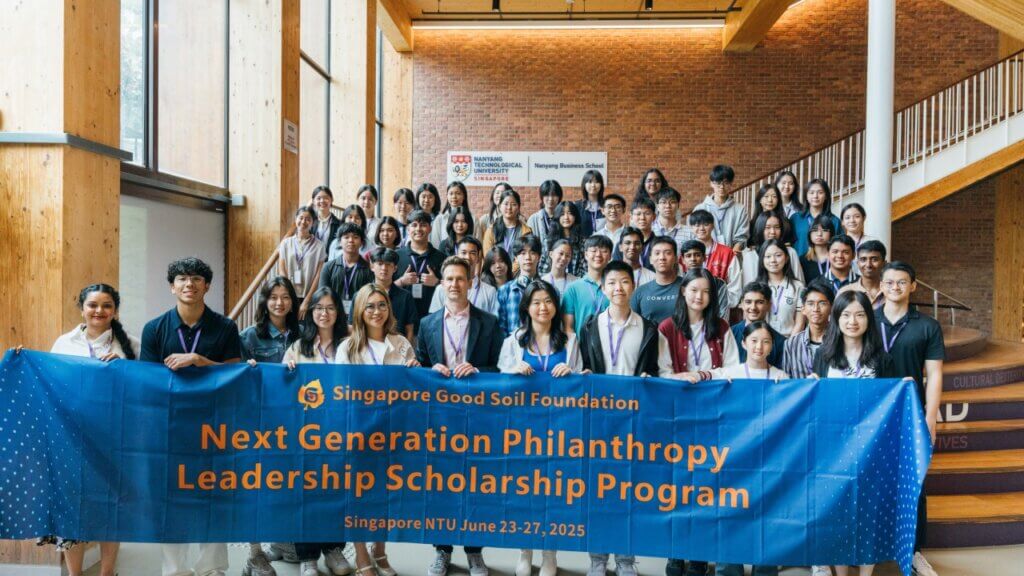
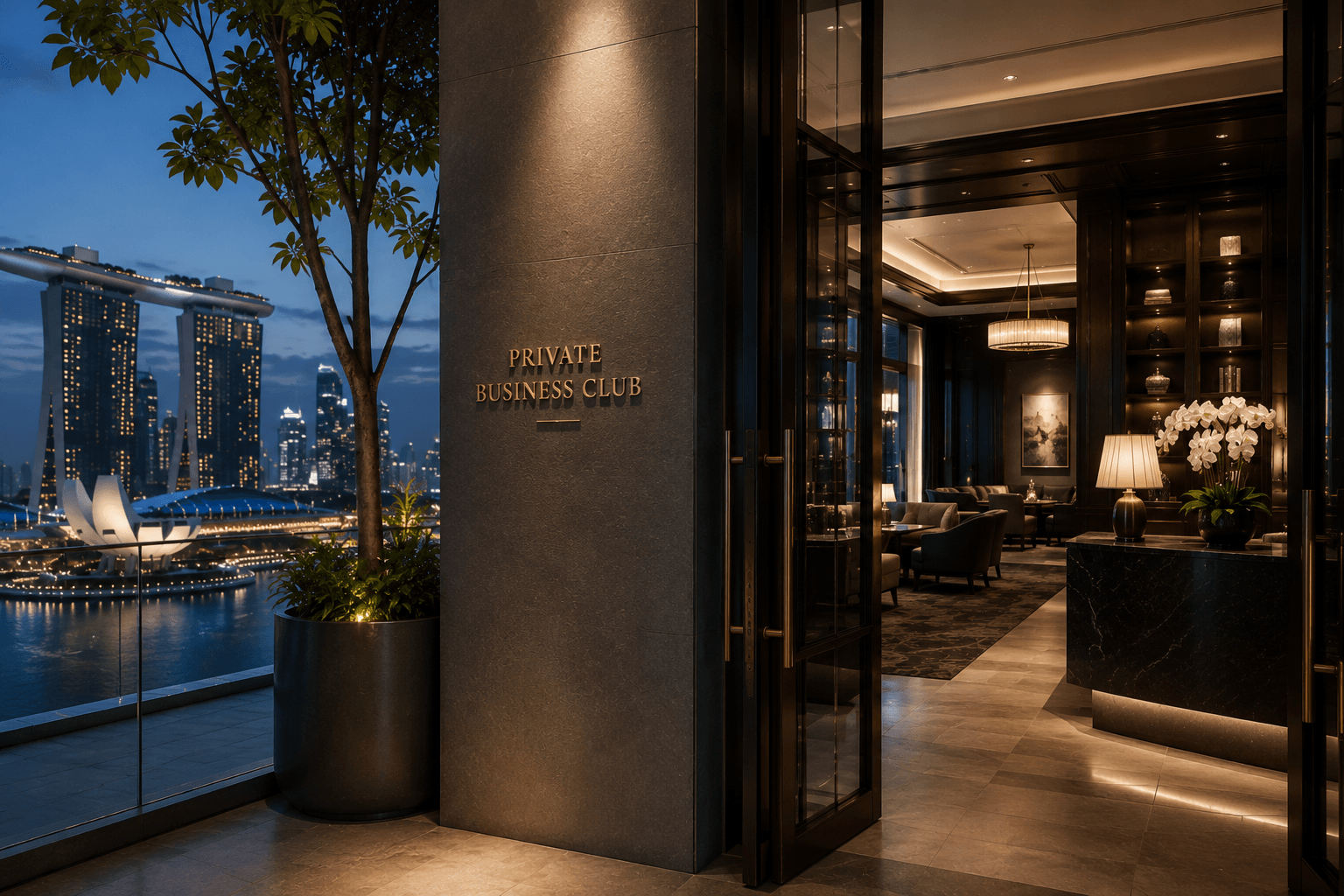
Singapore has built, in less than a decade, one of the most sophisticated philanthropic ecosystems in the world. The architecture is deliberate. The Monetary Authority of Singapore established a dedicated Philanthropy Working Group under its Private Banking Industry Group, with a mandate to develop the city-state not merely as a hub for wealth management but as a hub for purposeful capital deployment. The result is a regulatory and institutional environment explicitly designed to make giving sophisticated.
The rapid growth of family offices in Singapore — now numbering in the thousands, up tenfold in under a decade — has directly fuelled a philanthropy boom. These are not individuals setting up charitable foundations as an afterthought to wealth. They are treating philanthropy with the same analytical discipline they apply to private equity: rigorous due diligence, defined impact metrics, long time horizons, and an expectation of systemic rather than symptomatic change.
The institutional infrastructure to support this ambition is already in place. Temasek Trust established the Centre for Impact Investing and Practices (CIIP) in 2022, with a mandate to professionalise impact investing across Asia and beyond. ABC Impact, a USD 300 million PE fund backed by Temasek Trust, Temasek Holdings, Pavilion Capital, Mapletree Investments and others, has developed rigorous open-source frameworks for impact investing — a deliberate attempt to raise standards across the entire Asian ecosystem.
Temasek itself announced T-Spring, a SGD 150 million commitment to build future-ready capabilities in Singapore, seeding partnerships with local universities for STEM scholarships and launching the Temasek Fellowship programme to draw global leaders into applied research in data science, sustainable solutions, and life sciences.
What distinguishes Singapore’s approach is a concept that has begun to circulate in its family office community: moonshot philanthropy — the deliberate funding of high-risk, unconventional ideas that have the potential for systemic impact at scale. Family offices that have spent careers deploying capital into private equity and venture capital are now extending that same risk appetite and analytical framework into the philanthropic space, moving fluidly up and down the impact spectrum — from grant-making to impact investing — to align capital with values in ways that standard charitable giving cannot achieve.
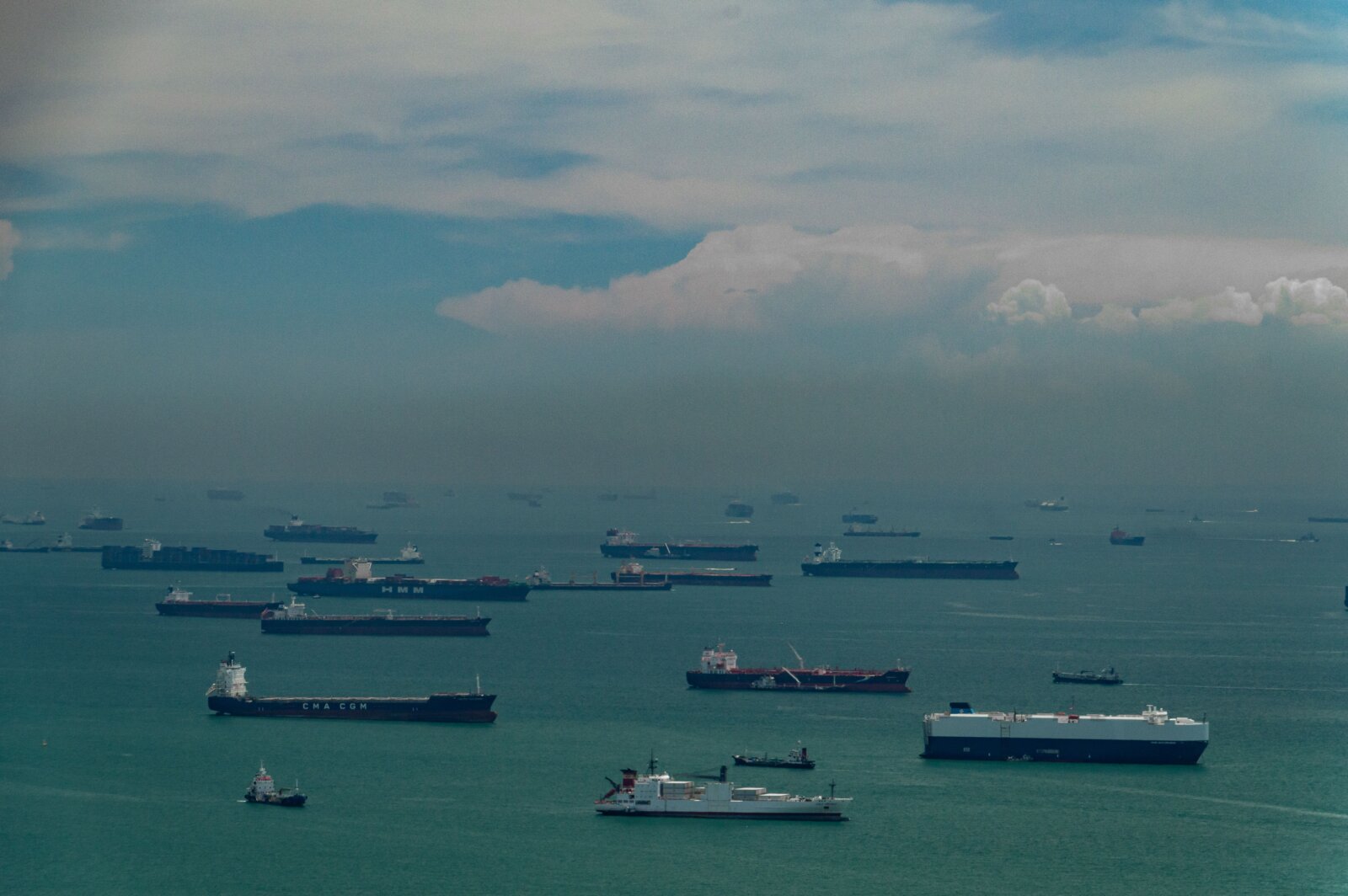
The Philanthropy Asia Alliance, supported by Temasek Trust and with members including the Tanoto Foundation and Ray Dalio’s Dalio Philanthropies, has formalised a Blue Oceans initiative focused on marine and ocean conservation across Asia — a cause that, not coincidentally, aligns directly with the economic and environmental interests of a city-state whose entire existence depends on the sea.
The message from Singapore’s institutional environment is unusually explicit: nine out of ten family offices in Asia-Pacific are involved in philanthropy, disbursing an average of USD 4 million each over twelve months. The question is no longer whether to give. It is how to give in a way that compounds.
London: The Architecture of Purpose

London’s evolution in corporate philanthropy has been driven from a different direction — not from the top of the wealth hierarchy downward, but from the middle, where a generation of entrepreneurs, creative professionals, and impact-focused investors have built institutions that make purposeful giving inseparable from professional identity.
The Conduit Club in Covent Garden is the most visible example of this shift. Designed explicitly as a meeting ground for people operating at the intersection of business, sustainability, and social impact, it has become one of Europe’s most serious institutional settings for the conversation about how capital should be deployed differently. Members range from investors managing billions to policy-makers shaping regulation — held together not by wealth or industry but by a shared conviction that the separation between commerce and consequence is no longer tenable.
At the corporate level, London has become a proving ground for models that blur the line between business and philanthropy entirely. Patagonia’s 2022 decision to restructure its ownership — transferring approximately USD 3 billion in company equity to a trust dedicated entirely to environmental causes, with the explicit statement that “Earth is now our only shareholder” — reframed what corporate ownership could mean. It was an act of irreversible institutional commitment, not a CSR campaign. The philosophical ripple effects continue to reach London’s business community, where B Corporation certification (requiring verified social and environmental performance standards) has become a serious strategic signal rather than a marketing exercise.
The UK’s blended finance ecosystem — financial structures that combine philanthropic capital with commercial investment to address challenges that neither could tackle alone — has matured significantly. The Social Investment Business, which has deployed and managed over £750 million of loans and grants supporting more than 5,000 social sector organisations since 2002, launched a new five-year strategy in 2025 focused on three systemic priorities: green transition, infrastructure, and public services. This is not charity dressed in investment language. It is a genuine financial architecture designed to unlock capital for outcomes that market logic alone would never fund.
The Institute of Philanthropy, established in 2023 through a seed grant of HK$6.8 billion from the Hong Kong Jockey Club — announced a strategic research partnership with the Marshall Institute at the London School of Economics in 2025 to generate empirical data on how global financial hubs can unlock greater philanthropic capital and drive social innovation. London, Singapore, and Hong Kong are being studied as a connected system of philanthropic infrastructure — not as competing models but as complementary nodes in a global network.
Dubai: Scale as Philosophy
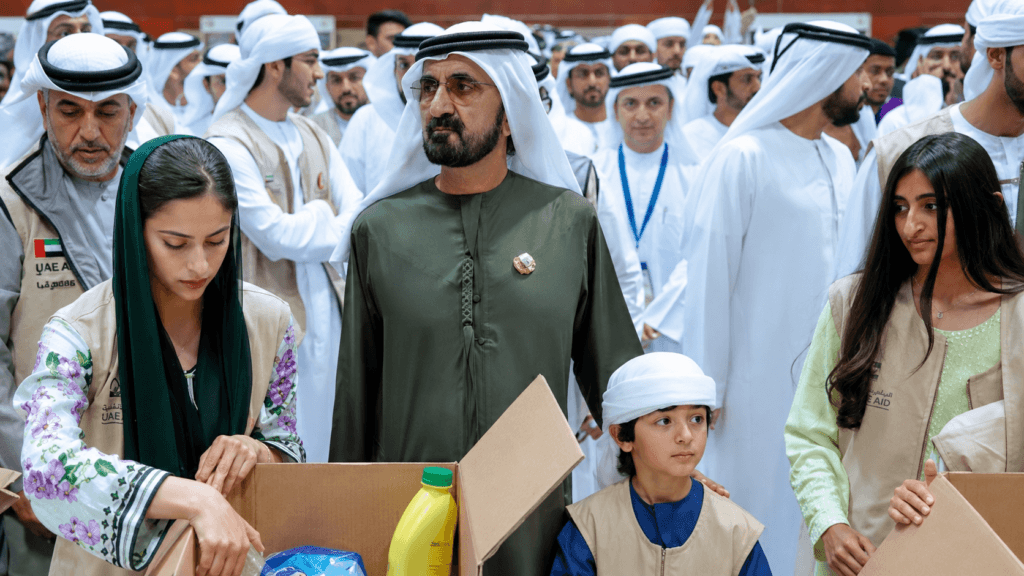
Dubai’s approach to philanthropy operates at a different register — one where the state itself is the primary philanthropic actor, and where the ambition is explicitly global rather than local.
The Mohammed bin Rashid Al Maktoum Global Initiatives (MBRGI), established in 2015, is the largest humanitarian and development organisation of its kind in the region. In 2025, MBRGI spent over AED 2.3 billion on projects and programmes that positively impacted 165 million people in 122 countries — an increase of 16 million people reached compared to the prior year. The scope is extraordinary: education, healthcare, poverty alleviation, cultural initiatives, and emergency humanitarian response, deployed simultaneously across more than a hundred nations through a professional team of 975 and a volunteer network exceeding 170,000.
Sheikh Mohammed’s framing of the MBRGI’s mission is worth noting precisely because it is not the language of charity. As he stated directly: “True impact is not measured by what we announce, but by what changes in people’s lives. More than helping others, our philanthropy also helps safeguard our nation.” This is philanthropy understood as statecraft — long-term investment in relationships, reputation, and soft power, executed with the discipline of a sovereign wealth fund.
In May 2025, MBRGI launched the Mohammed bin Rashid Endowment District — the region’s first fully integrated urban endowment project, designed to channel the endowment model toward education and healthcare and to enhance quality of life as a sustainable, self-perpetuating institution rather than a recurring expense.
Dubai Holding, the diversified investment company behind much of the city’s commercial infrastructure, has embedded philanthropy into its operational model rather than treating it as a separate function. Its Gift It Forward initiative — now in its third year — repurposed over 315,000 brand-new surplus items worth more than AED 14 million in 2025, diverting 85 tonnes of materials from landfill and transforming them into gifts for over 16,000 low-income individuals. The logic is elegant: commercial scale turned into social utility without extracting separate capital.
Dubai’s marine conservation work — including the world’s largest artificial reef development spanning 600 square kilometres, deploying 20,000 purpose-built reef modules over three years — reflects the same ambition: philanthropic investment in natural infrastructure that simultaneously serves environmental, economic, and reputational objectives.
The Structural Force Behind All of This
Underpinning all three cities’ philanthropic evolution is a single demographic reality whose implications have not yet fully arrived.
The Great Wealth Transfer — the unprecedented movement of assets as Baby Boomers pass wealth to Generation X and Millennials — is expected to move approximately USD 124 trillion globally by 2048. Of that, an estimated USD 18 trillion is projected to flow directly to philanthropic causes.
The inheriting generation carries fundamentally different instincts about capital. UBS’s Billionaire Ambitions Report 2025 found that 75% of next-generation wealth holders identify technology and artificial intelligence as a pressing social challenge, followed by climate change at 55% and poverty and inequality at 45%. These are not abstract concerns. They are the filter through which the next generation will decide where to place both their investments and their philanthropic capital.
The UBS Global Family Office Report 2025 confirms this directly: the role of philanthropy in stewarding family wealth is becoming more professional and more strategic, with family offices increasingly shaping how capital is deployed to address social and environmental challenges rather than simply responding to them.
For the Singapore-based executive who has built something significant, the shift in philanthropy is both a professional and a personal question. The infrastructure to give strategically — with the support of established frameworks, institutional partners, and measurable outcomes — has never been more developed. The regulatory environment in Singapore is explicitly supportive. The peer community, through institutions like Temasek Trust’s ecosystem and the Philanthropy Asia Alliance, provides the intellectual rigour and collaborative structures that individual giving cannot replicate.
The more interesting question is the one the most thoughtful philanthropists in all three cities are already sitting with: what is the legacy you are actually building? The bronze plaque on a hospital wing was never really the answer to that question. The organisations that are doing the most interesting work — in Singapore, London, and Dubai alike — have understood that philanthropy, at its best, is not what you give away. It is the clearest expression of what you believe the world should become.