
When a Book Outperforms a Painting: What the £1.2 Million Wuthering Heights Sale Tells Collectors
A Record That Redraws the Map of Rare Book Investing
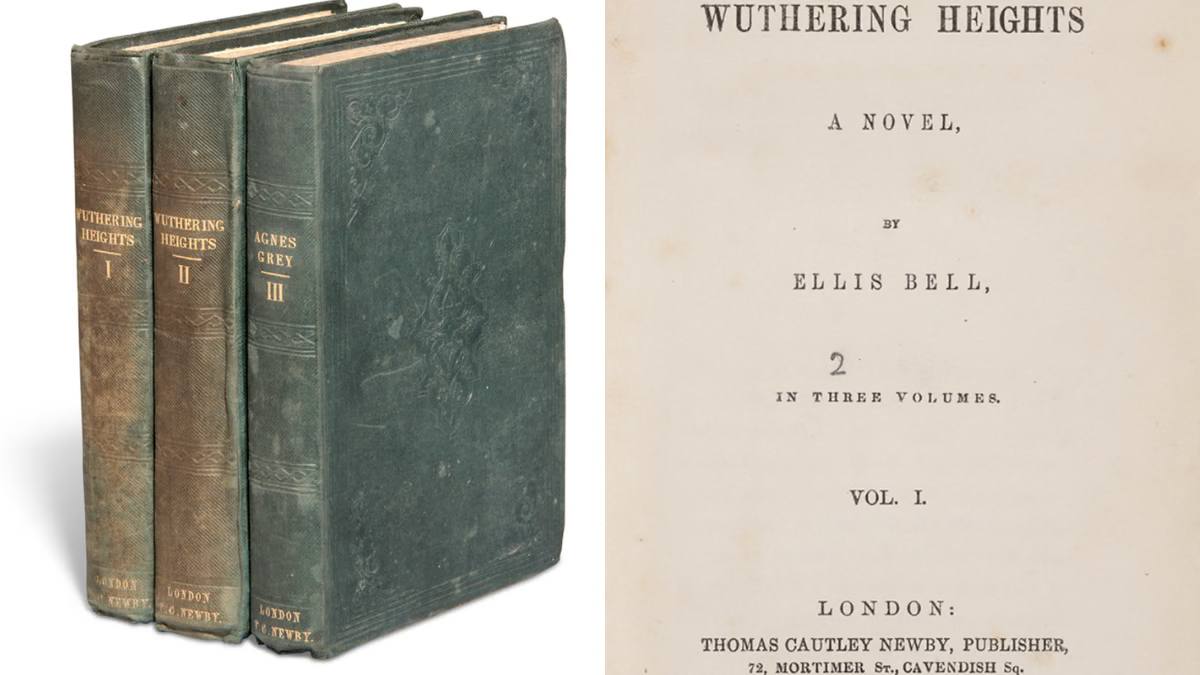
At the end of June 2026, Christie’s in London sold a first edition of Wuthering Heights — bound together with Anne Brontë’s Agnes Grey, as the three-volume set originally appeared in 1847 — for £1,206,500. The result, achieved against a pre-sale estimate of up to £600,000, did more than double expectations. It set a new world auction record for Emily Brontë, marked the highest price ever paid for a printed book by a woman, and became the priciest sale of any 19th-century literature at auction.
For Singapore’s collectors and family offices, the sale is a useful reminder that rare books — long treated as a niche beside fine art, wine and watches — belong firmly inside the conversation about tangible, alternative assets.
Why This Particular Copy Mattered
Rarity in book collecting is rarely about the text. It is about the object. Christie’s specialist Mark Wiltshire made this explicit, describing the volumes as “a work of art,” adding that “it is not the text but the objects, these books in their original binding, which are so important and so extraordinarily rare.”
The specific condition driving value was the original 1847 publisher’s cloth binding — a detail easily lost on a general audience but decisive to specialists. Almost all surviving copies of the poorly printed first edition, likely numbering no more than 250, have since been rebound for public or private collections, stripping them of their original state. This copy hadn’t been. According to Christie’s, it is one of only six known copies to remain in its original 1847 publisher’s cloth binding, and no textually complete copy in that binding had appeared at auction since 1908.
Even the book’s flaws became part of its value. Emily Brontë’s publisher, Thomas Cautley Newby, rushed the volume into print in late 1847, leaving little time for proofreading — a decision that resulted in erratic punctuation and misspellings throughout, including, notably, a misspelling of “Heights” itself within the text. Collectors, as is often the case in rare books, prize these imperfections as evidence of authenticity rather than seeing them as defects.
The Waiting-List Logic of Ultra-Rare Assets
What makes this sale instructive for investors is less the price than the scarcity mechanics behind it. As Wiltshire put it: “The last time one appeared at auction was in 1908, so no collector alive has had a chance to acquire one.” Forbes’ rare books correspondent framed the anticipation even more starkly, quoting Wiltshire’s observation that collectors had effectively been waiting for this opportunity since before they were born.
This is the same scarcity logic that underpins ultra-prime real estate, single-owner watch collections, and blue-chip art with untraceable provenance gaps. When an asset simply does not trade — not because demand is low, but because supply is functionally frozen — price discovery becomes explosive the moment a genuine example finally surfaces. The gap between the £600,000 high estimate and the eventual £1.2 million hammer price is a textbook illustration of what happens when an entire generation of buyers has been waiting on the sidelines for one chance.
Context: How Rare a First Edition Really Is
For comparison, a separate, less exceptional first edition of Wuthering Heights — one without the original cloth binding — sold at Bonhams for £114,000, more than double its expected price, in a sale where only three comparable copies had come to auction in the previous 35 years. That sale alone would have been considered a strong result by most standards. The June 2026 Christie’s result was more than ten times that figure, underscoring just how disproportionately condition and originality — not merely age or authorship — drive value in this category.
Why Books Belong in a Serious Alternative Portfolio
Singapore’s wealth community has, over the past decade, grown comfortable treating wine, whisky, watches and classic cars as legitimate stores of value alongside equities and property. Rare books have been slower to enter that conversation, partly because the market is thinner and less standardised, and partly because valuation depends heavily on expert judgment rather than transparent comparables.
But the Wuthering Heights result points to three characteristics that should appeal specifically to a Singapore-based collector base:
Portability and storage efficiency. Unlike a painting or a car, a first edition occupies almost no physical space and travels easily — a meaningful consideration for collectors who move between Singapore, Hong Kong and London, or who store assets within Singapore’s freeport infrastructure.
Genuine scarcity with cultural permanence. Wiltshire’s description of Brontë’s novel as “canonical,” adding “it will always be” — speaks to the kind of durable cultural relevance that underpins long-term value in any collectible category, from art to timepieces. The novel’s continued adaptation across film, television, opera and even a chart-topping pop song reflects a cultural footprint that shows no sign of fading, which matters enormously to long-horizon collectors.
Low correlation to financial markets. Rare book auctions are driven by bibliographic scarcity and condition census, not by interest rates or equity cycles — offering a genuine diversification benefit that few asset classes can claim credibly.
The Takeaway for Collector-Investors
The sale is unlikely to trigger a rush into rare books overnight. The market remains thin, specialist-driven, and unforgiving of amateur due diligence — condition, provenance and binding history require the kind of expertise that only a handful of specialists worldwide genuinely possess. But for family offices already allocating to art, wine and watches, the Wuthering Heights result is a reminder that the rare book market can produce returns and record-breaking demand that rival — and in this case exceed — far more established collectible categories.
As Singapore continues to position itself as Asia’s storage, transaction and advisory hub for tangible wealth, categories like rare books deserve a more serious seat at the table than they have traditionally been given. The next great scarcity story may not arrive on canvas or in a barrel — it may arrive, quietly, in cloth-bound covers that haven’t left a private shelf in over a century.