

The Return Of Real Hospitality, And Why Hotels Are Losing
Why private clubs and members-only residences are outperforming hotels — and what it actually takes to get inside
The best hotel in the world cannot give you what a private club can. It can give you a thread count, a view, a chef with three stars, and a concierge who remembers your name. What it cannot give you is the thing that matters most to the people who can afford anything: genuine discretion, and a room full of people who belong there.
This is the logic behind one of the most significant shifts in luxury hospitality in a generation. The global private members’ club market reached USD 34.2 billion in 2024, growing at 7.1% annually — and is projected to nearly double to USD 63.6 billion by 2033. That is not a niche trend. It is a structural repositioning of where the world’s most capable, most private, and most discerning people choose to spend their time.
Why hotels lost the argument
Hotels are, by design, democratic. Anyone with a credit card can book a room. The five-star suite next to yours might be occupied by someone on a corporate travel package. The lobby is a transit space. The restaurant is open to walk-ins. For most travellers, this is perfectly fine. For the segment of the market that values signal as much as service, it is the precise problem.
“When the economy is uncertain, people with wealth are less comfortable walking into random places,” as one longtime Zero Bond member put it. “They prefer private environments.”
That preference has become a market. What began as a renaissance of traditional club culture has transformed into something far more sophisticated: integrated lifestyle ecosystems that blur the boundaries between hospitality, real estate, wellness, and community building. The modern private club is not a lounge with a door policy. It is a parallel city — one with its own restaurants, spas, libraries, suites, programming, and, most importantly, its own population.
The clubs that define the category
At the apex of New York’s landscape sits the Aman Club, tucked inside the Crown Building on Fifth Avenue. The initiation fee is reported at $200,000, with $15,000 in annual dues — making it widely regarded as the most expensive private club in the city. In exchange, members access a 25,000-square-foot spa across three floors, private dining rooms, a cigar terrace, an underground jazz club, and the full gravitational pull of the Aman brand — which has, over three decades, become synonymous with the kind of quiet that only extreme luxury can buy.
One tier below in price, but equal in prestige, sits CORE Club — repositioned in 2023 into a 60,000-square-foot flagship on Fifth Avenue. Positioned as “an international community of minds, mavericks, and leaders,” CORE is more than a private social club — it provides spaces for transformation and conversation, with a highly curated collection of books, art, private meeting rooms, and eleven suites for overnight guests. Memberships range from $15,000 to $100,000 for a family, with annual dues on top. The committee evaluates not just wealth, but whether an applicant can meaningfully contribute to the community.
In London, the calculus is older and, if anything, more opaque. 5 Hertford Street — hidden behind an unmarked maroon door in Mayfair — was founded in 2012 by Robin Birley with his father’s cast-iron door policy in mind. The process requires two letters of recommendation from existing members and a short interview with a club secretary. But securing that recommendation is the real work. Members are the gatekeepers, and they are selective about whom they sponsor. The club has been described as the new smoking room of Downing Street — a place where political and financial conversations happen with the assurance that they stay in the room.
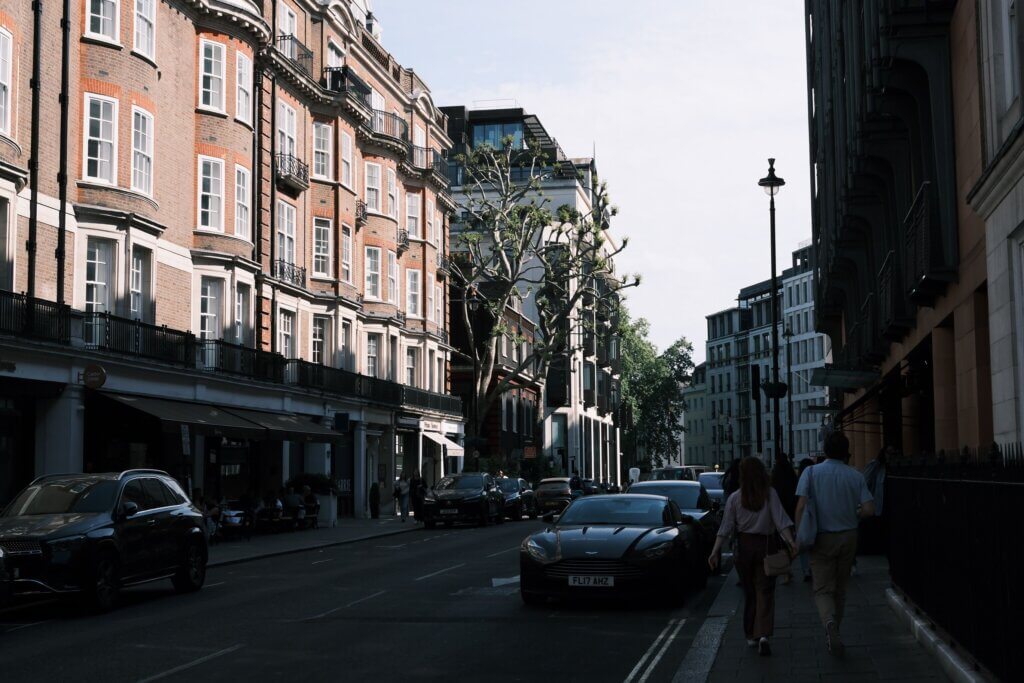
Photo: Pexels
The waitlist as status symbol
In 2024 and 2025, many iconic institutions closed their waitlists to the general public, moving to a strictly curated invitation-only model. The Soho House waiting list currently exceeds 100,000 applicants — meaning a prospective member can expect a wait time of four to five years. Institutions like Annabel’s in Mayfair or the Yacht Club de Monaco maintain multi-year queues where a six-year wait is considered the norm.
The waiting list is not a failure of supply management. It is the product itself. Scarcity creates meaning, and meaning — in a world where almost anything can be purchased — is the ultimate luxury. As Joseph Foudy, an economics professor at NYU Stern, puts it: “If the club maximises profits, you want as many members as possible. But if it gets too crowded, it loses its exclusivity.” The best clubs have chosen the latter, deliberately.
The property premium
The ripple effects of private clubs extend well beyond their walls. Research by Knight Frank has found that demand for properties within a 15-minute drive of Soho Farmhouse in the Cotswolds attracted 2.3 times higher buyer interest in the summer of 2024. Properties within a mile of the club sold faster than similar properties further away. The implication for portfolio strategy is clear: proximity to the right club is now a property fundamental, not a lifestyle afterthought.
Branded residential developments integrated with members’ clubs are commanding meaningful premiums over comparable properties without that access. The club is no longer an amenity — it is infrastructure.
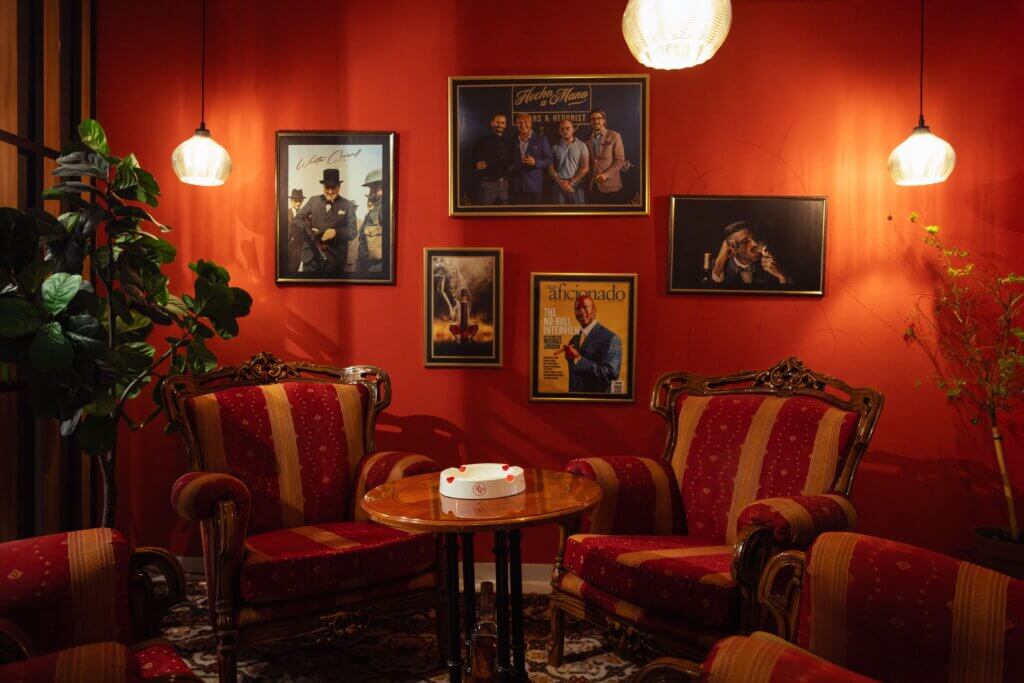
Photo: Pexels
How to actually get in
For those who understand the landscape, access is a question of strategy rather than simply money. The frameworks differ by club and city, but the underlying logic is consistent.
At clubs like Zero Bond in New York, a letter of recommendation from a current member and a committee review assess whether applicants “display a high level of integrity and demonstrate an ability to contribute to the community.” Interpret that how you will — but the point is clear: the committee is curating a room, not a roster.
For London’s oldest clubs, the path runs through existing members. Building relationships before you need the endorsement — attending associated events, engaging with club programming, becoming known to the right people — is not a shortcut. It is the only route. More clubs have opened in the past four years than in the three decades following the Groucho Club’s 1985 launch, which means that while the most established doors remain narrow, the landscape is expanding — and newer clubs with rigorous curation are worth watching closely.
The principle that holds across all of them: you are not buying access to a building. You are being admitted to a community. The application, however it is structured, is ultimately asking whether you are someone that community wants inside.
For those who genuinely are, the answer tends to come.