

The Art of Private Jet Etiquette and Economics
Flying privately is no longer just about the aircraft. It’s about knowing the code — and the cost.
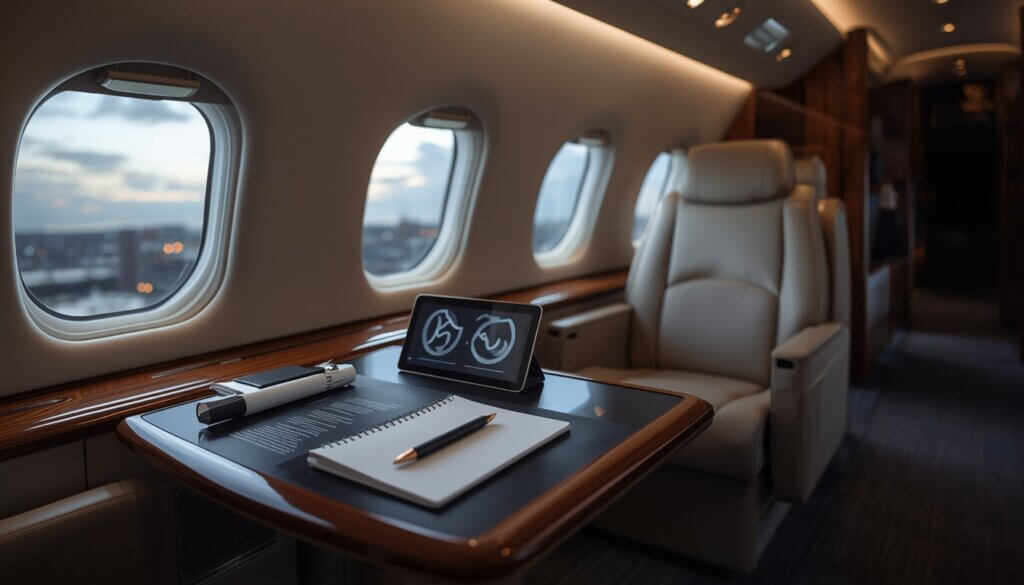
There’s a quiet but telling moment that separates seasoned private flyers from those new to it. It happens in the FBO lounge at Seletar, or at a small terminal in Geneva, when someone boards a charter jet and immediately begins narrating the experience on their phone. The crew notices. So do the other passengers. And just like that, an unspoken verdict has been delivered.
Private aviation has always run on an invisible currency — discretion, presence, and an almost old-world sense of courtesy. In Singapore, where the private jet charter market is growing at over 8% annually and the city now anchors Southeast Asia’s entire private aviation network, understanding both the social grammar and financial logic of flying privately has never been more relevant.
The Code Before the Cabin Door
The first rule of private aviation — the one Fly Victor, which regularly transports royalty and global business leaders, describes as most fundamental — is that silence is golden. Not physical silence, but a kind of social restraint. Experienced flyers don’t announce movements. They don’t livestream departure lounges. They protect information the way they protect capital.
“Discretion is not secrecy — it is control,” as the operators at Fly Business Aviation put it. In circles where visibility is optional and anonymity is intentional, the quietest arrivals are often the most powerful.
Beyond that governing principle, the etiquette of private flying is less about rules than about rhythm:
- Timing. Arrive 15 to 30 minutes before departure — enough to demonstrate respect for the crew’s preparation, not so early that you’re waiting around. Unlike commercial aviation, private terminals function at the pace of the principal traveler. Holding a jet is expensive and, more pointedly, discourteous.
- Seating. On a charter, the host or principal passenger chooses first. If you’re a guest, settle in where it makes sense without making a production of it. The absence of boarding passes and overhead bins isn’t license for formlessness.
- Dress. There is no dress code on a private jet. There is, however, an atmosphere. Elevated casualwear — tailored trousers, a quality knit, anything that signals intentionality — fits the environment without looking like you’re trying too hard. The freedom of private travel is best worn lightly.
- The crew. These are professionals managing safety and logistics simultaneously, often behind a studied calm. Treat them as skilled peers, not household staff. Tipping is customary — typically USD 50 to 100 per crew member — though the more meaningful gesture is simply acknowledging the precision they bring to every flight.
- Digital presence. The most refined thing you can do at 40,000 feet is put the devices down. As one operator observed, attention has become the rarest currency onboard. When it’s quiet, conversations deepen, decisions sharpen. The connections that matter rarely need Wi-Fi.
The Economics: What Private Aviation Actually Costs
The social dimension of flying privately is inseparable from the financial one. In Singapore, where 134,000 high-net-worth individuals created one of Asia’s most concentrated pools of private aviation demand in 2024, the economics of private flying have become a genuine strategic consideration — not merely a status decision.
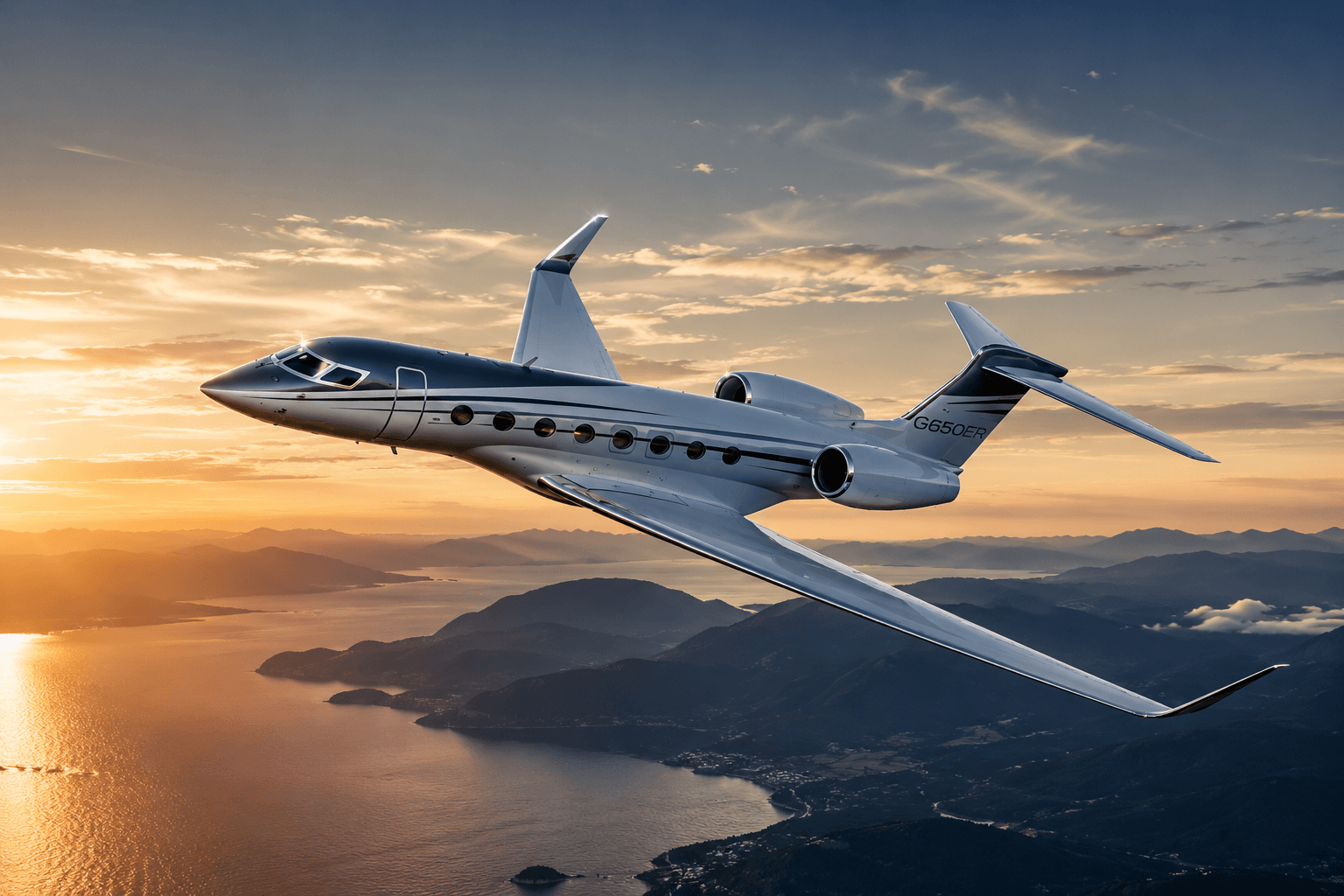
Charter remains the dominant model for Singapore-based travelers — and for good reason. Fractional ownership programmes, while attractive in the United States (where aircraft depreciation can be expensed against corporate tax), offer far fewer advantages in Asia due to the absence of equivalent legislation. A 1/16th share of a Gulfstream G650 starts at approximately USD 5.8 million, with hourly costs of around USD 5,200 on top. The maths only works at 100 or more flight hours annually — a threshold very few Singapore-based clients reach.
By contrast, on-demand charter offers significant flexibility with no capital lock-in. Singapore to Hong Kong — the corridor that represents the majority of regional private aviation activity — runs between USD 22,000 and USD 70,000 one way, depending on aircraft class. Singapore to Bali on a light jet starts at around USD 12,000. Singapore to Kuala Lumpur, barely 45 minutes in the air, can be arranged from approximately USD 15,000.
For those flying 50 to 70 hours per year, a jet card programme — VistaJet’s Silver tier starts at a USD 250,000 deposit with hourly rates of around USD 8,500 — may offer better availability guarantees than pure ad-hoc charter without the financial exposure of fractional ownership.
One underutilised opportunity worth knowing: empty leg flights. When an aircraft repositions after dropping off a client, operators offer these legs at 40 to 65% off standard rates. The Hong Kong–Singapore route alone generates over 150 empty leg opportunities monthly. The trade-off is inflexibility on timing, but for a secondary trip where schedule matters less than value, it’s a compelling option.
Why Singapore Is Different
Seletar Airport — Singapore’s dedicated general aviation terminal — offers private jet clearance in under 15 minutes, compared to 45 to 60 minutes at Changi. That time asymmetry is itself part of the value proposition: a flight to Jakarta or Phuket begins the moment you leave the car, not two hours later in a departure queue.
Singapore’s position as the region’s financial capital has made it the natural hub for intra-ASEAN private aviation. The Asia-Pacific charter fleet as a whole grew 18.2% between 2023 and 2025. Singapore’s own private fleet expanded 14.3% over the same period. The trajectory reflects something structural: a generation of entrepreneurs and executives who have run the numbers and concluded that the cost per productive hour — door to door, without the ritual degradations of commercial travel — justifies the investment.
The global private jet market is projected to grow from USD 13 billion to over USD 21 billion by 2026. In Southeast Asia specifically, the charter market is expected to reach USD 60 million by 2030, growing at over 8% annually. These are not vanity numbers. They reflect a genuine shift in how time-conscious professionals in this part of the world are choosing to move.
The Real Return on Investment
Warren Buffett — a man not known for extravagance — famously named his first private jet The Indefensible before renaming it The Indispensable. The shift in framing captures something true: the case for private aviation isn’t made on luxury, it’s made on leverage. Control over your schedule. The ability to work, think, or rest without interruption. The capacity to move between Singapore, Jakarta, and Hong Kong in a single day without the compounding friction of commercial connections.
For the Gemvest reader — someone who has built something significant and understands the compound value of protected time — private aviation is best understood not as expenditure, but as infrastructure. The question isn’t whether you can afford it. It’s whether you’ve calculated what your time is actually worth.
The etiquette, in the end, follows naturally from that understanding. People who know what they’re investing in tend to carry themselves accordingly: quietly, purposefully, and without needing anyone else on the plane to know it.