

The quiet architecture of gold: why Singapore wants a bigger role in Asia’s bullion market
Gold may be one of the oldest assets in a modern portfolio, but the infrastructure around it is becoming increasingly sophisticated. Singapore has spent more than a decade building a bullion ecosystem around tax efficiency, refining, secure storage and financial connectivity, and in 2026 the city-state is taking the next step. For private capital, the question is no longer simply whether to own gold, but where and how that gold should sit within a global portfolio.
The asset nobody needs to explain
There is a strange simplicity to gold. It does not produce earnings, pay dividends or depend on a management team. It has no founder to back and no technological roadmap to follow. Yet after centuries of financial innovation, central banks, institutions and private investors continue to allocate capital to an asset whose investment case can often be reduced to a single quality: it exists independently of any one company, issuer or technology.
That simplicity has become more interesting as global wealth itself has become more complicated. Family offices today may hold operating businesses, private equity, venture capital, public markets, real estate and increasingly sophisticated structured products across several jurisdictions. In such portfolios, physical gold does not need to outperform everything else to be useful. Its role can be much quieter: diversification, liquidity and a tangible reserve of value that is not tied to the operating performance of a particular business.
Singapore understood this distinction early. Its rise in bullion has not been driven simply by a sudden enthusiasm for gold among local investors. It has been constructed through policy and infrastructure, with the city-state deliberately positioning itself as a place where precious metals can be refined, traded, transported and stored efficiently.
The tax decision that changed the market
The turning point came in 2012, when Singapore removed GST from qualifying investment precious metals. The policy was explicitly intended to facilitate the development of the country’s gold refining and trading cluster, and it remains one of the foundations of Singapore’s bullion proposition today. Under the current rules, imports and local supplies of qualifying investment precious metals are exempt from GST. For gold bars, ingots and wafers, the metal generally needs to meet a minimum purity of 99.5 per cent, be capable of being traded on the international bullion market and carry an internationally accepted mark of quality.
The significance of the measure was larger than a simple tax saving. Before the reform, Singapore’s GST regime had made the domestic bullion market considerably less competitive, while the government was looking to revive the city’s historical role in precious-metals trading. Following the exemption, non-monetary gold imports increased sharply, and Singapore moved to develop the wider ecosystem needed to support the trade, including refining capacity, bullion banking, wholesale trading and secure logistics. An LBMA-accredited refinery, Metalor Technologies Singapore, opened in 2014, adding an important link to the local supply chain.
This is where Singapore’s approach differs from the traditional image of a gold market. The objective was never simply to encourage people to buy more bars. It was to make the jurisdiction itself more useful to the bullion industry.
Where the metal actually sits
For a private investor, the most interesting part of that ecosystem may not be the tax treatment at all. It is custody. Physical gold creates a set of questions that do not arise in quite the same way with a listed security. Who holds it? Where is it stored? How is it insured? Can ownership be transferred without moving the underlying metal? How quickly can it be sold or transported? What happens if the investor needs to move the asset across jurisdictions?
Singapore has built significant infrastructure around these questions. One of the most recognisable examples is Le Freeport, a high-security storage facility located next to Changi Airport. The complex provides bonded, insured storage for high-value assets and is positioned to allow valuable goods to move between storage and international air freight with limited exposure to public-road transportation. The facility is also home to specialist logistics and custody providers serving the precious-metals market.
For UHNW investors, this is more than a logistical convenience. The physical location and custody structure of an asset become part of the investment architecture when the asset itself is portable, valuable and potentially held across generations. A family office does not necessarily need its gold to be physically moved every time ownership or custody changes. Singapore’s emerging model increasingly allows the financial and legal ownership of bullion to evolve around professionally stored metal, reducing some of the operational friction associated with physical assets.
That is the less visible side of the gold market, and arguably the more relevant one for sophisticated capital.
Why Singapore, and why now?
The timing of Singapore’s ambitions is not accidental. Asia has become increasingly important to the global gold market, both as a source of investment demand and as a centre of trading activity. The World Gold Council recorded a major increase in global investment demand in 2025, while its 2026 research points to continued strength in Asian demand and sustained interest from central banks. The council’s latest central-bank data show that Singapore added 10 tonnes to its official gold holdings during the first half of 2026, bringing reported reserves to 197 tonnes.
The central-bank figure should not be read as a direct signal for private investors. Governments hold gold for reserve-management purposes, not because they are attempting to maximise portfolio returns in the way a family office might. What it does illustrate is the continuing institutional relevance of bullion at a time when reserve managers are paying greater attention to diversification, geopolitical risk and the location of strategic assets. The World Gold Council’s 2026 central-bank survey found that respondents increasingly regard gold as an important strategic asset and that diversification of gold-vaulting locations is becoming a more prominent consideration.
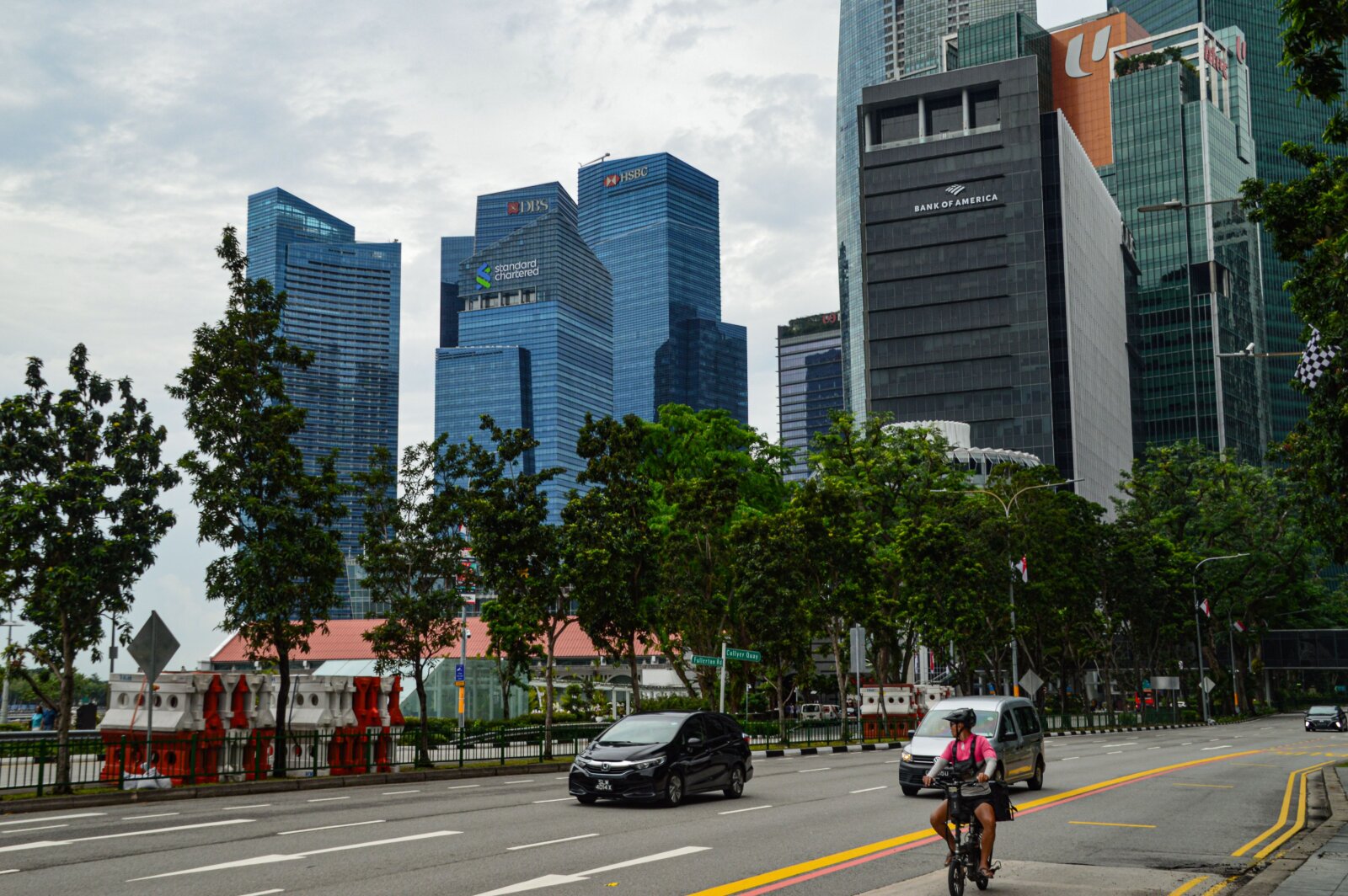
For Singapore, this creates an obvious strategic opportunity. The city already has the attributes that make it attractive to international wealth: a major financial sector, sophisticated professional services, international connectivity and a position at the centre of Southeast Asian trade. The question is whether those advantages can be translated into a deeper role in the global bullion market.
From vaults to market infrastructure
This is where the story becomes more interesting than the conventional safe-haven narrative.
In March 2026, MAS and SBMA outlined areas for further development of Singapore’s gold ecosystem, including clearing and settlement, vaulting and logistics, as well as gold-related financial products. The direction suggests that Singapore is looking beyond the traditional functions of refining and storage and towards a market in which gold can become more deeply integrated into institutional financial infrastructure. SBMA has also highlighted the possibility of Singapore providing vaulting services for foreign central banks and sovereign entities, a development that would place the city-state in a more strategic position within the international reserve-management ecosystem.
That ambition is significant because London remains the benchmark for global bullion liquidity and infrastructure. Singapore does not need to replicate London to be successful; its more realistic opportunity lies in serving the Asian time zone and connecting the region’s growing pools of capital with established global markets. Its competitive advantage is therefore less about replacing an existing centre than about becoming a more useful bridge between Asian wealth, physical bullion and international financial markets.
For Singapore-based family offices, this evolution could eventually translate into a broader range of custody arrangements, investment products and institutional services. The precise shape of that market is still developing, and it would be premature to assume that every proposed initiative will reach the scale of London or New York. But the direction of travel is clear enough to merit attention.
The value of keeping gold boring
Gold’s greatest strength may be that it has never needed a compelling narrative. It does not promise exponential growth, technological disruption or the next great consumer trend. It simply remains available when investors want an asset whose value is not dependent on the success of a single company or the solvency of a single issuer.
That makes the Singapore story particularly revealing. The city-state is taking one of the oldest forms of wealth and surrounding it with some of the most sophisticated infrastructure in modern finance. Tax policy, accredited refining, secure vaulting, international logistics, bullion trading and financial-market connectivity are gradually becoming part of the same ecosystem.
For a private investor, the conclusion is not that gold should replace equities, private markets or property, nor that Singapore guarantees superior returns on bullion. It is more subtle. The jurisdiction is becoming increasingly relevant to the question of how physical wealth can be held, moved and integrated into an international portfolio.
Gold itself remains remarkably boring. The architecture being built around it in Singapore is anything but.