
Trust, Rebuilt In Code: How Blockchain Is Rewriting The Diamond’s Value Proposition
Natural diamonds are facing their most serious credibility challenge in decades, as lab-grown alternatives capture nearly half the engagement ring market. The industry’s response — putting individual stones onchain — is less about novelty and more about solving a problem that has quietly undermined diamond investing for years: nobody could ever fully verify what they were buying.
A crisis of confidence, not just a price correction
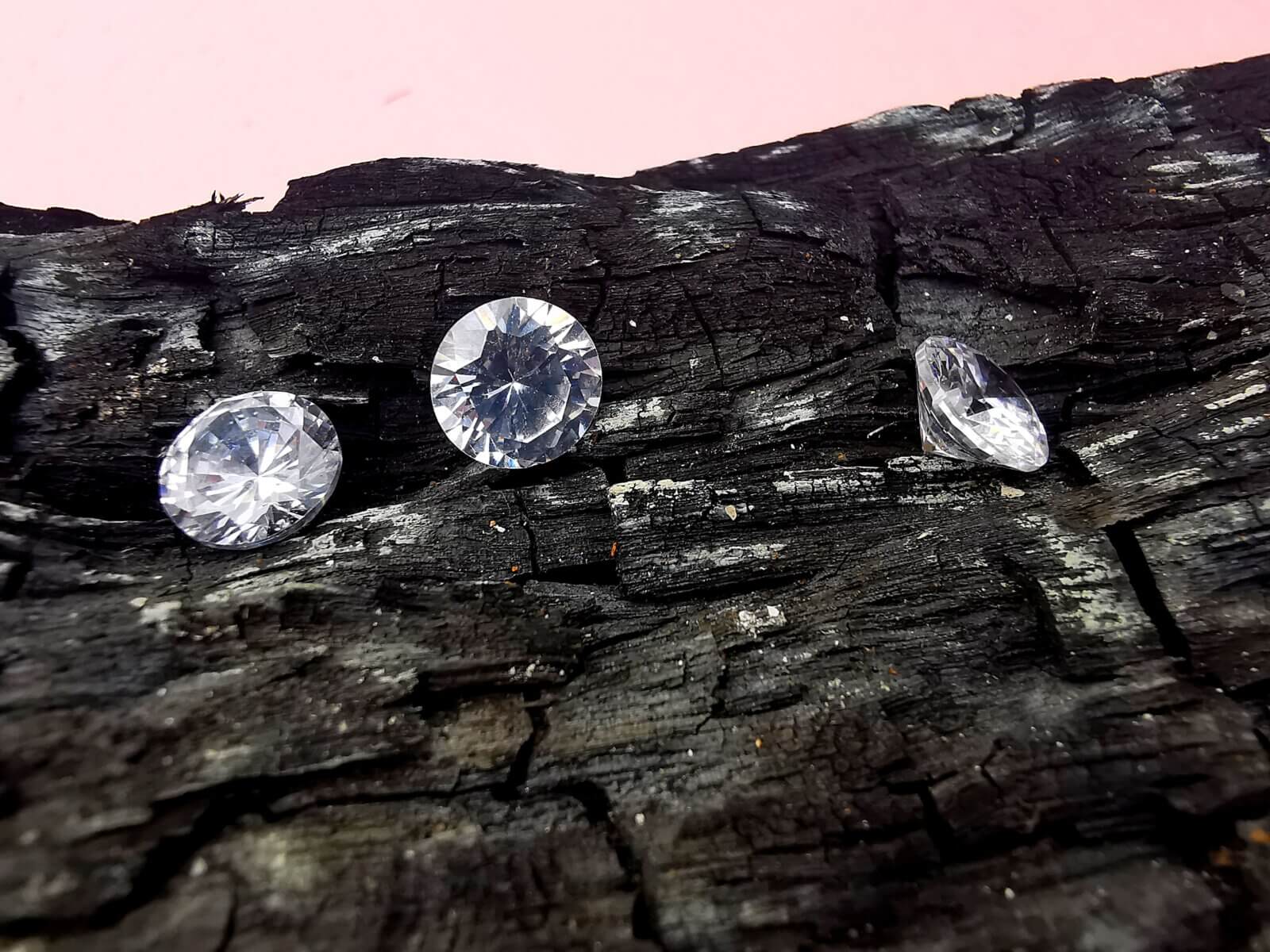
For most of the past decade, natural diamonds enjoyed something close to unquestioned status as a store of value — rare, certified, and backed by a supply chain controlled by a handful of major producers. That certainty has eroded quickly. Lab-grown diamonds, chemically identical to mined stones but a fraction of the cost, have captured close to half the global engagement ring market, and natural diamond prices have faced sustained pressure as a result.
The industry’s response has been notably coordinated. In June 2026, the Gemological Institute of America acquired a 30% stake in Tracr, the blockchain-based traceability platform developed by De Beers Group since 2018. The scale of what Tracr has already built is considerable — the platform has registered more than five million rough diamonds at their source, covering roughly two-thirds of De Beers’s rough diamond production by value. The acquisition signals something important: the world’s most respected grading authority is now a direct stakeholder in proving where a diamond came from, not merely what it is.
This matters because the two questions — authenticity and provenance — have never been fully separable. A grading report from a reputable laboratory has long told a buyer what a stone is. It has never reliably told them where it came from, how many hands it passed through, or whether the stone currently in a vault is genuinely the one described on paper. Blockchain traceability is an attempt to close that gap permanently.
How tokenization actually works
The mechanics are more procedurally rigorous than the “digital diamond” framing suggests. A physical stone is first independently graded and vaulted with a regulated custodian. Only then is a smart contract deployed to mint a digital token representing that specific, vaulted diamond — embedding metadata such as its grading report, serial number and physical location directly into the digital asset. When the token changes hands between wallets, legal ownership of the underlying physical stone transfers simultaneously.
Crucially, the system depends on regular independent audits of the physical vault, with results published onchain to confirm that circulating tokens match the diamonds actually held in reserve. This is the feature that distinguishes serious tokenization platforms from speculative digital collectibles: the token is not the asset. It is a claim on an asset that must be continuously, verifiably reconciled against physical reality.
Recent institutional activity illustrates the direction of travel. In February 2026, custody and tokenization firms moved more than $280 million worth of certified polished diamonds onchain in the UAE, using regulated custody infrastructure to secure the physical stones. The project’s structure — institutional-grade custody, certified stones, regulatory sign-off required before broader rollout — reflects an industry trying to build credibility slowly rather than rushing retail access to market.
The honest limitations worth understanding
For a sophisticated investor audience, it would be a disservice to present tokenization as a solved problem. The most significant vulnerability is structural: while the token exists on a decentralized ledger, the physical diamond it represents sits in a single, centralized vault. That vault is a single point of failure. If custody is compromised, mismanaged, or simply not audited rigorously enough, the token’s backing becomes questionable regardless of how sound the blockchain infrastructure is.
There is also a legal dimension that varies meaningfully by jurisdiction — the mapping between a digital token and enforceable physical property rights is not uniform globally, and a token that confers clear ownership rights in one jurisdiction may not do so automatically in another. For any investor considering this category, the custodian’s regulatory standing and audit discipline matter considerably more than the underlying blockchain technology itself.
Why this conversation belongs in Singapore
Singapore sits at an unusually relevant intersection for this development. The city is simultaneously a serious hub for physical gemstone trade and storage — supported by its freeport infrastructure and established precious goods logistics — and one of Asia’s most credible jurisdictions for regulated digital asset activity, with the Monetary Authority of Singapore having built one of the region’s clearer frameworks for tokenized real-world assets.
That combination is not common. Many jurisdictions are strong in one dimension but not the other — deep gemstone trading infrastructure without digital asset regulatory clarity, or the reverse. Singapore’s collector and family office community is therefore reasonably well positioned to evaluate this category with the seriousness it requires: understanding both the physical custody question a diamond broker would ask, and the smart contract and audit question a digital asset compliance officer would ask.
What this means for the diamond as an asset class
The deeper significance of this shift may not be tokenization itself, but what it reveals about the industry’s own assessment of its trust problem. When the sector’s leading grading authority takes an equity stake in traceability infrastructure, it is effectively conceding that certification alone — a paper report, a certificate number — is no longer sufficient reassurance for a buyer weighing a mined stone against a lab-grown alternative at a fraction of the price.
For collectors and investors already holding physical diamonds, or considering gemstones as part of a diversified tangible-asset allocation, the practical takeaway is straightforward: provenance verification is becoming a standard expectation, not a premium feature. Stones with verifiable, blockchain-anchored chain-of-custody are likely to command a growing credibility premium over those that rely solely on a certificate and a seller’s word — a dynamic collectors in other categories, from wine to watches, will find familiar.
The diamond has always sold a story about permanence and rarity. What is changing is who gets to verify that story, and how convincingly. For an asset class built almost entirely on trust, that shift is not a technological curiosity — it may be the industry’s most consequential development in a generation.