
The Sensory Ledger: Why Capital Is Following Touch, Not Just Taste
For a decade, value was measured in speed — the fewer clicks, the better the brand. That calculus is reversing. As global spending on experience overtakes spending on goods, the businesses capturing premium pricing are the ones engineering weight, scent, sound and friction back into the world. For allocators, this is no longer a lifestyle footnote; it is a thesis with balance-sheet consequences.
For much of the last decade, the winning formula in consumer-facing business was subtraction. Remove the step, remove the wait, remove the surface — faster checkout, thinner screens, frictionless delivery. Digital convenience was not just a feature; it was the entire value proposition, and it set the competitive benchmark from retail to hospitality to entertainment. Capital followed accordingly, rewarding scale and frictionlessness above almost everything else.
That formula is now being quietly inverted. Global consumer spending on experiences — travel, dining, live entertainment — reached USD 8.5 trillion in 2024, outpacing spending on goods for a third consecutive year. The number matters less as a headline than as a signal: the premium is migrating away from the frictionless and back toward the physical, the sensory, the deliberately effortful. For investors who built portfolios around digital-first consumer brands, this is worth sitting with.
Presence as the new scarcity
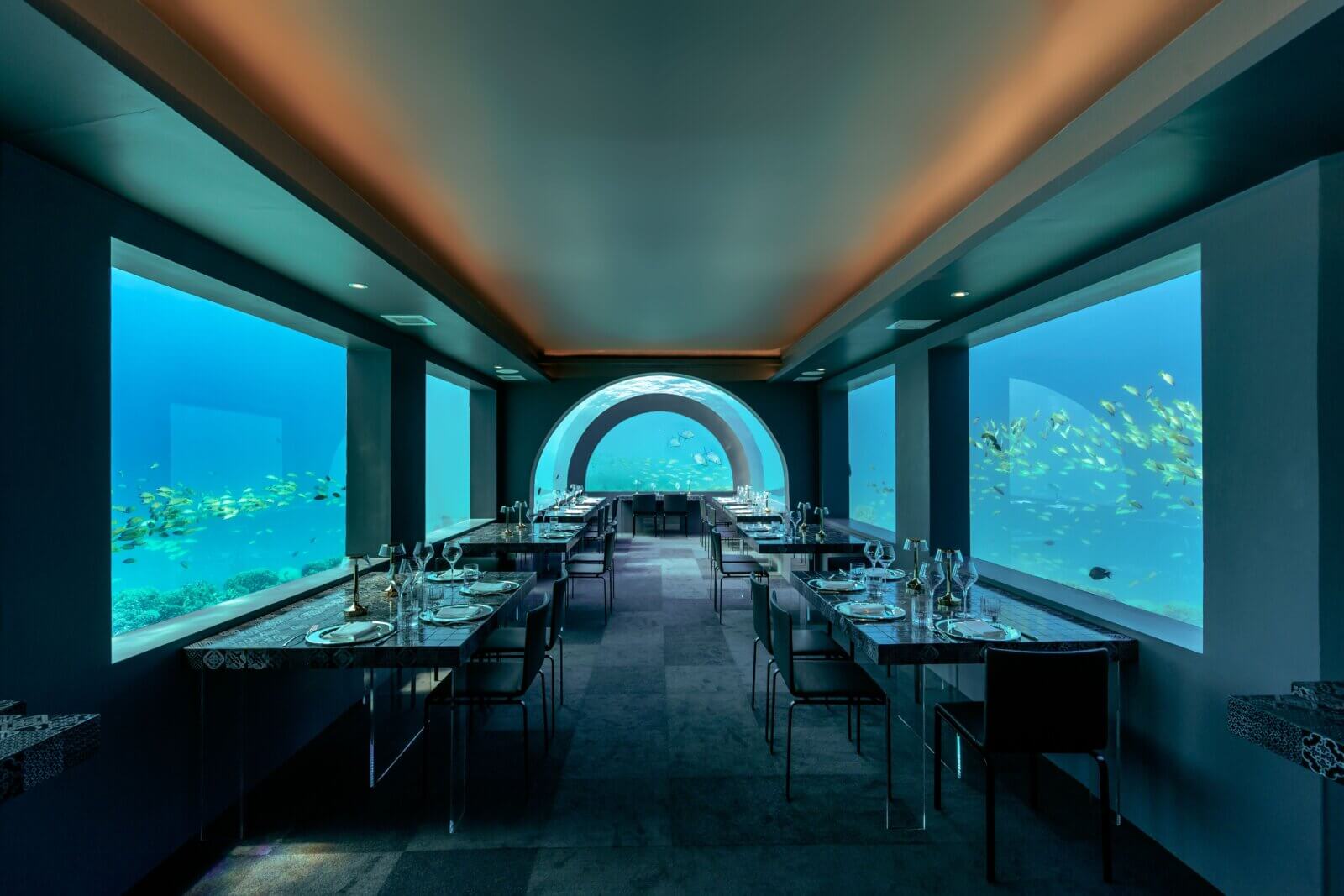
Consider three recent ventures, each unrelated in category but aligned in logic. A concert festival in Spain has begun outfitting audiences with haptic garments, making a live performance physically felt rather than only heard — a direct rebuttal to the idea that music is now best consumed through a phone speaker. On Tanzania’s Pemba Island, the Manta Resort has launched the third generation of its Underwater Room, developed with Genberg Underwater Hotels: a three-level floating suite with a submerged bedroom three metres below the surface of the Indian Ocean, its windows opening onto reef fish in the Pemba Channel, its economics tied to active reef restoration rather than incidental to it. In Finland, a ski resort has buried a EUR 20,000 gold bar somewhere on its grounds to convert an off-season liability — empty summer trails — into an active, sensory search.
None of these are gimmicks in the pejorative sense. Each is a deliberate re-engineering of scarcity. Where digital products compete on removing friction, these products compete on reintroducing it — depth, weight, risk, discovery — because friction, correctly designed, is what makes an experience non-replicable and therefore non-commoditised. That is the underlying investment logic: in a world where almost anything can be delivered to a screen instantly, the thing that cannot be delivered to a screen becomes the premium asset.
Where the opportunity concentrates
Three spaces stand out for allocators assessing this shift, not as abstractions but as areas where capital is already moving.
The first is packaging and material design as a direct carrier of brand value, rather than a cost centre to be optimised. A Thai edutainment venue now serves food framed around a simulated climate-collapse future — an unsettling premise, deliberately so, that turns a meal into an argument. A luxury fashion house has begun building its signature weave from fungi-derived material instead of animal hide, making the object itself, not the marketing around it, the evidence of the brand’s position. In both cases, the physical material — its texture, its provenance, the story it visibly tells when held — is doing commercial work that campaign spend cannot replicate. For investors, this reframes materials innovation (bio-derived leathers, engineered textiles, sensorially distinct packaging) as a genuine differentiation layer in consumer businesses, not a sustainability afterthought.
The second is environment as the product. Retail and hospitality brands that treat lighting, acoustics, scent and spatial flow as commercial infrastructure — rather than interior design — are building a reason to visit that a digital equivalent structurally cannot offer. The Manta Resort’s underwater suite and the haptic-garment festival both monetise environment first and service second; the environment is what justifies the price, and the service simply delivers it. This has direct relevance for hospitality and experiential real estate allocations, where the underwriting question shifts from occupancy and service scores toward the defensibility of the sensory environment itself.