
Origin Bar: The Business of Turning an Idea Into a Drink
Inside the lobby of Shangri-La Singapore, bar manager Adam Bursik has built a menu that reinvents itself on a punishing cycle — and made that instability the point.
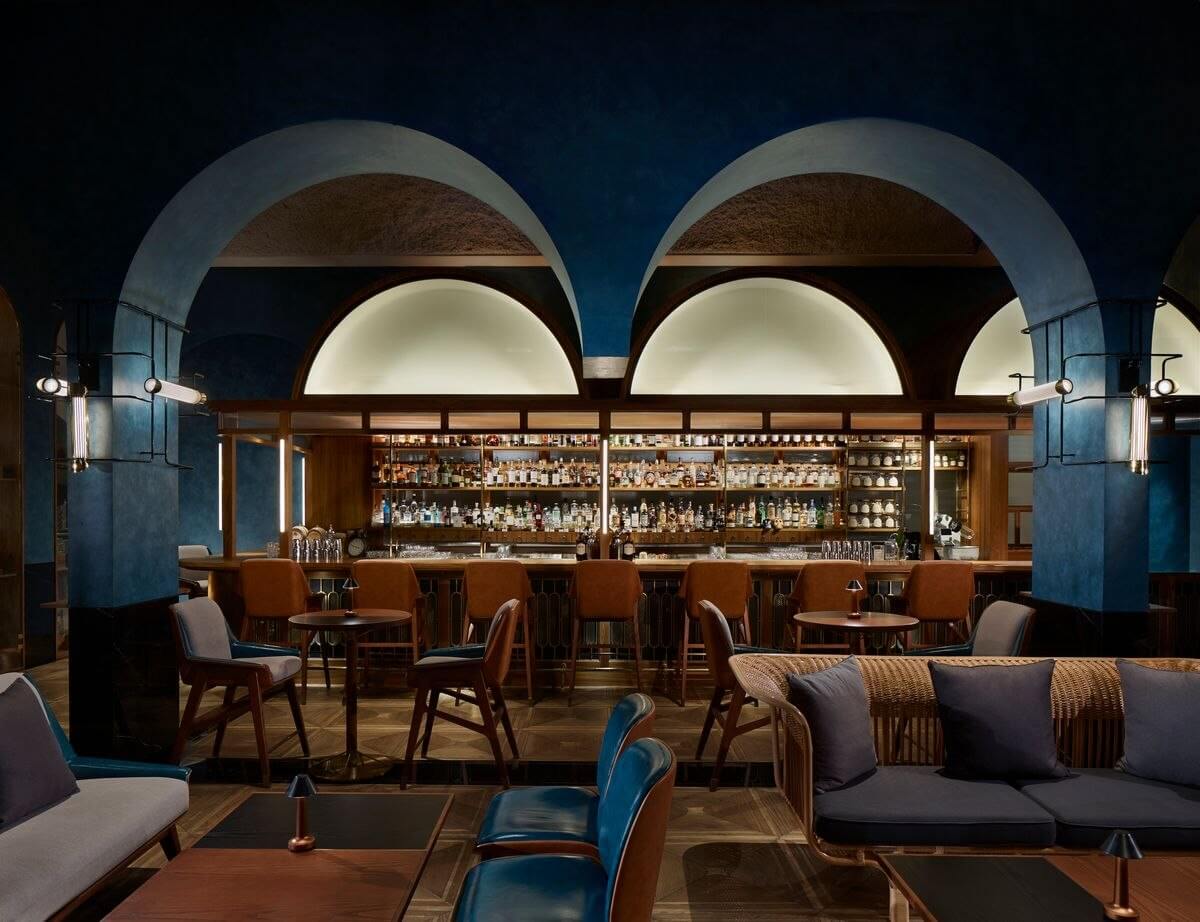
Tucked into the Tower Wing of Shangri-La Singapore, behind a bar shaped like a vintage railway ticketing counter, Origin Bar has spent close to a decade doing something most successful bars actively avoid: refusing to sit still. Since opening in 2018, the menu has been rebuilt from scratch several times over — each iteration a full departure from the last, built around a different animating idea rather than a refined version of what came before.
The current chapter, X — Crossing, is built on a simple premise: what happens when two things that don’t obviously belong together are forced to meet. Cultures, memories, rituals, flavours, eras — eighteen cocktails, each one a collision. We sat down with the bar manager Adam Bursik to talk about where his ideas actually come from, what it costs to tear up a working menu, and why he’d rather Origin evolve than calcify into a museum of its own hits.
The idea comes before the liquid
For Bursik, a cocktail rarely begins with an ingredient. It starts somewhere else entirely — a memory, a place, a piece of music, an unexpected connection between two things that have no business sitting together. Only once that idea has taken shape does he ask the harder question: how does this become a flavour. Working in that order, he says, is what keeps the drinks from turning into pure technical exercise. That discipline is what allows a single concept to stretch across an entire menu without repeating itself. X — Crossing works, he explains, because it’s broad enough to give the team room to explore, but specific enough that every cocktail still belongs to the same world — once he realised the idea of “crossings” could be mined indefinitely without redundancy, he knew it could carry eighteen drinks rather than one.
The cost of refusing to let a menu settle
Most bars protect a working menu once it’s proven itself. Origin does close to the opposite — rebuilding entirely, on a cycle few venues would accept. Bursik doesn’t romanticise what that costs: time, R&D, retraining, new glassware and equipment, a long list of mistakes, and — hardest to swallow — retiring cocktails that were genuinely good and could easily have stayed. What it buys back, in his view, is momentum. The full reset forces the whole team to relearn their craft and keeps them from getting too comfortable with what already worked. He’d rather Origin keep moving than become, as he puts it, a museum of its own greatest hits.
Discipline, not just creativity
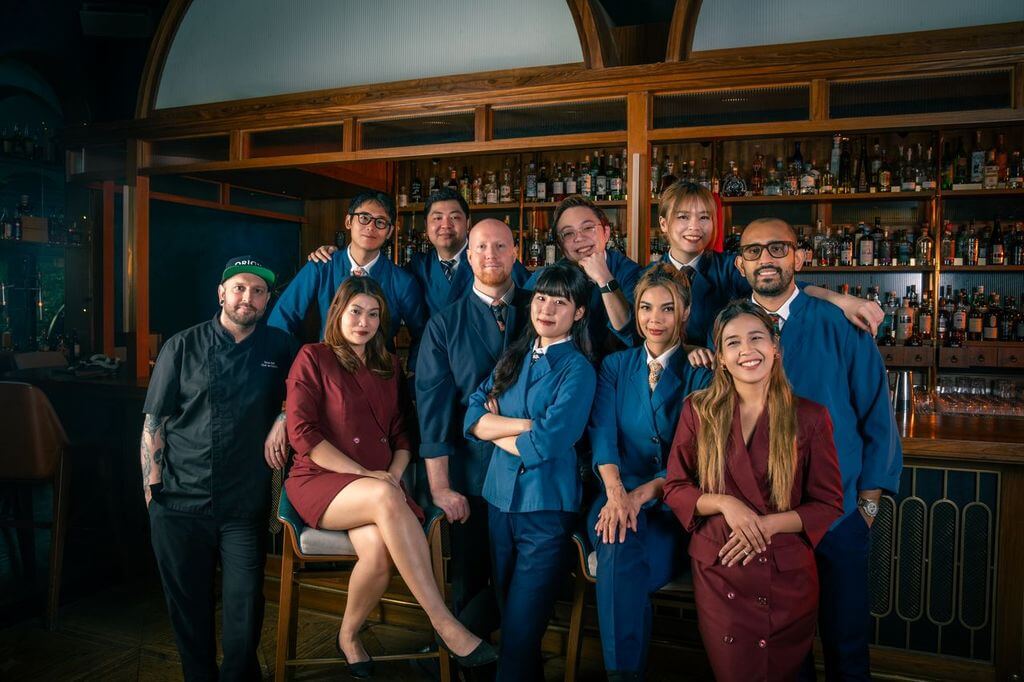
A hotel bar answers to a different kind of pressure than a standalone room. On any given night, Origin might be serving a guest who flew in specifically to sit at this bar, seated beside someone who simply wants a Gin & Tonic. That tension, Bursik says, is what teaches restraint — creativity has to earn its place without ever coming at the expense of hospitality or accessibility. The real challenge is building something interesting enough for serious cocktail drinkers while still making a guest who couldn’t care less about “cocktail culture” feel completely at home with what’s in their glass.
It’s also taught him where ambition tips into self-indulgence. Origin has made drinks that were technically impressive but demanded too much explanation before a guest would trust them — and if a cocktail needs five minutes of context to justify itself, something in the build is wrong. The lesson: complexity should live behind the bar, not on the guest’s side of it. Technique is meant to disappear into the drink, not become the reason the drink exists.
Two cocktails, one philosophy
Ask Bursik which cocktail on the current menu he’s proudest of, and he doesn’t point to the most elaborate build. He points to Sense of Belonging — lychee, peated Scotch, sea salt, built around a feeling rather than a technical flex. On paper it looks almost too simple next to some of the menu’s more layered constructions. That’s exactly why he rates it: when a complicated idea resolves into something this clear, he considers the job done properly.
For a single drink that captures Origin’s identity as a whole, he’d choose Pain au Chocolat — a cocktail that crosses Paris with New Orleans, translating the familiar ritual of a pastry through the bones of a Sazerac, layered with granola, burnt butter, white chocolate, absinthe and Peychaud’s. Underneath the construction, it’s still meant to taste recognisable and pleasurable. That, to him, is Origin in miniature: familiar on first sip, with something unexpected underneath.
What he wants Origin remembered for
Not every reaction lands as intended. Asked for the strangest response a cocktail has ever provoked, Bursik doesn’t hesitate: a guest who told him she hated the drink, then asked for another one exactly like it. It’s a fitting note for a bar manager who seems more interested in provoking a reaction than in being universally liked. If there’s a single idea he wants attached to Origin’s decade-long story, it’s this: a serious cocktail bar doesn’t have to take itself too seriously. Technique, hospitality, ingredients and storytelling can all matter enormously, without the bar losing sight of why anyone actually walks in — not to admire the cleverness behind the bar, but to have a good time. If Origin is remembered as a place where ambition never came before hospitality, Bursik says that’s a legacy he’d be happy with.
Origin Bar is located at Shangri-La Singapore, Lobby Level, Tower Wing, 22 Orange Grove Road.
Photography courtesy of Shangri-La Singapore / Origin Bar