

From pilot to practice: what Singapore’s Project Guardian means for tokenised assets
Singapore is working to move asset tokenisation from controlled experiments towards financial infrastructure that institutions can use in real markets. Through Project Guardian, the Monetary Authority of Singapore and financial-industry partners are testing how funds, bonds and other financial products can be issued, transferred and settled using digital tokens. For private investors and family offices, the important question is what this could change about investment access, liquidity and the management of wealth.
What tokenisation actually means
Imagine an investment fund whose ownership records and certain administrative processes are managed through a shared digital ledger. Instead of relying entirely on separate systems that must exchange and reconcile information, the fund can represent eligible ownership interests as digital tokens. Depending on the product’s structure, those tokens may represent interests in a fund, rights associated with a bond or claims connected to another financial asset.
This is the basic idea behind asset tokenisation: creating a digital representation of an asset or of specific rights associated with it. The token is not automatically the underlying asset itself. Its legal meaning depends on the documentation, the issuer and the structure through which the holder’s rights are established and enforced.
The distinction matters to investors. A token associated with a property, for example, does not necessarily give its holder direct legal ownership of that property. It might instead represent shares in a company that owns the property, an interest in a fund or a contractual claim. Each structure carries different rights, risks and restrictions.
Tokenisation is also distinct from cryptocurrency speculation. Project Guardian focuses on financial-market applications involving institutions and products such as funds, bonds, foreign exchange and bank liabilities. The technology may use distributed-ledger infrastructure, but the investment questions remain familiar: what is being purchased, who is responsible for it, how is it valued, and what happens if an issuer or intermediary fails?
Project Guardian: Singapore’s institutional test bed
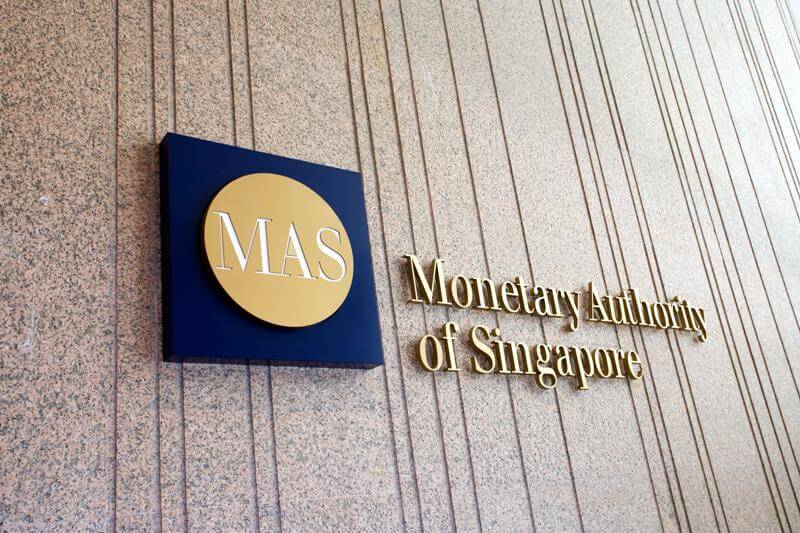
The Monetary Authority of Singapore, or MAS, launched Project Guardian in May 2022 as a collaboration with the financial industry to examine the potential of asset tokenisation and decentralised finance in regulated financial markets. Its purpose is to test practical use cases, identify barriers to adoption and develop common approaches to the legal, operational and technical challenges of tokenised finance. MAS describes Project Guardian as a cross-border initiative bringing together financial institutions, industry associations, central banks and regulators. Its work spans asset and wealth management, fixed income and foreign exchange, with an emphasis on interoperability: enabling digital assets to be issued, traded and settled across different platforms and jurisdictions.
The project is not a retail investment platform, and participation in a trial does not mean that every tokenised product is available to the public. It is better understood as an institutional test bed for the systems, standards and arrangements that could support wider commercial adoption.
The distinction between a pilot and a functioning market is crucial. A pilot can demonstrate that a transaction is technically possible between a limited number of participants. A commercial market requires more: legal certainty, reliable custody, operational resilience, compatible systems, appropriate regulation and enough counterparties to make transactions practical. It must also establish what happens when a transfer is disputed, a system goes offline or a participant fails to meet its obligations. In a keynote address on 9 October 2026, MAS Managing Director Chia Der Jiun said that the feasibility of tokenisation had been tested across different asset classes through Project Guardian, while the challenge now was to scale commercial adoption. His remarks reflect the initiative’s current focus: moving from demonstrations towards products and infrastructure that can operate within real financial markets.
Why liquidity is the harder problem
Liquidity is often cited as one of tokenisation’s potential benefits, but it is important to distinguish easier transfers from a genuinely liquid market. An asset is liquid when it can be bought or sold relatively quickly without a substantial impact on its price. Representing an asset as a digital token may simplify some transactions, but it does not automatically create buyers or guarantee that an investor can exit when needed. Consider a private-market fund. A tokenised structure could make certain administrative tasks, such as updating ownership records or processing eligible transfers, more efficient. Yet if the fund has a small investor base, strict transfer restrictions or no established secondary market, an investor may still struggle to sell the holding. The technology does not eliminate the underlying economics of the asset.
Interoperability is therefore central to Project Guardian’s work. If a token can circulate only within one isolated platform, its practical usefulness may be limited. Compatible systems and shared standards could make it easier for different institutions to recognise and process transactions. But even where technical interoperability exists, legal restrictions, investor eligibility rules and the availability of counterparties can still constrain trading. For family offices, the distinction is particularly relevant. A tokenised investment should not be treated as liquid simply because it can be represented or transferred digitally. Investors need to understand redemption terms, transfer permissions, fees and realistic exit options before committing capital.
From funds to bonds: where the use cases matter
Project Guardian has explored applications across several areas of institutional finance. In asset and wealth management, tokenised fund structures may allow parts of the fund lifecycle to be handled more efficiently, from subscriptions and ownership records to asset servicing and transfers. MAS’s Guardian Funds Framework sets out recommendations for tokenising fund activities, including on-chain share registers and approaches to interoperability.
For asset managers, the potential benefit is operational as well as commercial. Conventional fund administration often involves multiple service providers and systems that must exchange data and reconcile records. Tokenised structures may streamline some of these processes, although the outcome depends on how well the new infrastructure integrates with existing systems and whether it reduces costs in practice.
Fixed income offers another use case. Bonds already have established legal and trading conventions, so creating a digital representation is only one part of the task. Issuance, ownership records, custody, payments and settlement must work together, and institutions need clarity about the legal status of the security. The Guardian Fixed Income Framework, developed with industry partners, provides guidance on implementing tokenisation in debt capital markets, including delivery-versus-payment settlement and custody arrangements.
Foreign exchange and transaction banking raise a related challenge: coordinating payments across currencies, institutions and jurisdictions. MAS’s work on tokenised bank liabilities examines how shared-ledger infrastructure could support cross-border settlement and liquidity management. In principle, compatible systems could make some transactions faster and reduce the need to reconcile separate records manually, although the outcome depends on participating institutions, settlement assets and legal arrangements.
These applications are connected, but they are not interchangeable. A fund interest has a different legal and operational profile from a bond or a bank liability. Each requires an appropriate structure, safeguards and settlement process. The value of common digital infrastructure lies in making different parts of the financial system work together, not in assuming that one token model can solve every problem.
The missing piece: digital money and settlement
One of the less visible challenges in tokenised finance is the payment itself. Even if an asset is transferred on a digital ledger, the cash leg of the transaction may still depend on separate systems. If the asset transfer and payment cannot be coordinated reliably, the transaction may retain many of the operational complexities that tokenisation is intended to address.
This is why MAS has placed emphasis on trusted forms of digital money, including tokenised bank deposits and wholesale central bank digital currency. In his October 2026 speech, Chia Der Jiun described three foundational layers for digital finance: digital assets, digital money and digital infrastructure. The argument is that tokenised assets cannot scale sustainably without reliable settlement arrangements, clear rules and systems that financial institutions can trust.
For investors, the principle is straightforward. A transaction is not complete merely because a digital record changes. Participants need confidence that the payment is final, the transfer is legally effective and the process can withstand operational or counterparty problems. Settlement design is part of the financial infrastructure, not a technical detail that can be ignored.
What this could mean for Singapore’s wealth industry
Singapore’s position in asset and wealth management makes tokenisation particularly relevant to its financial institutions and private-capital ecosystem. If tokenised products become commercially viable, they may provide new ways to administer investments, coordinate transactions and distribute selected financial products through participating institutions. For family offices, the implications are likely to emerge gradually rather than through a sudden transformation of portfolio construction. Tokenisation could make certain processes more efficient, improve how ownership records are maintained or enable new forms of financial product distribution. Whether these changes deliver meaningful benefits will depend on the product, its costs, its legal structure and the infrastructure supporting it.
The initiative already includes major financial institutions, asset managers, custodians and market infrastructure providers. MAS’s published materials identify participants including DBS, OCBC, UBS, Franklin Templeton, Hamilton Lane and others. Their involvement demonstrates institutional interest in developing workable models, but participation in Project Guardian should not be mistaken for an endorsement of every tokenised product or an assurance that all trials have become widely available commercial offerings.
From experimentation to commercial adoption
Project Guardian is best understood as a long-term effort to establish the standards and infrastructure that could allow tokenised financial products to operate across institutions and jurisdictions. Its significance lies not in the number of tokens created, but in whether its work leads to systems that financial institutions can use reliably in real transactions.
MAS’s current direction is clear: the technical feasibility of tokenisation has been demonstrated in a range of use cases, while the next challenge is commercial adoption. That requires agreement among issuers, investors, banks, custodians, settlement providers and regulators on how the market should function. It also requires products that address a genuine need rather than simply digitising an existing process without improving it.
For wealthy investors, the development is worth following, but it should not be confused with an immediate investment recommendation. Tokenisation may change how selected assets are issued, administered and transferred. It may also create new operational efficiencies. Yet liquidity, costs, governance, legal rights and the quality of the underlying investment will remain decisive.