
Memilmyeon and the discipline of staying the same: inside NAE:UM 2.0
A restaurant that changes its walls but not its convictions is rarer than it sounds. At NAE:UM, Chef Louis Han spent 2025 rebuilding the physical space around a menu whose foundation hasn’t moved in five years — proof that in Singapore’s most serious kitchens, reinvention and consistency are not opposites, but the same discipline.
A renovation, not a reinvention
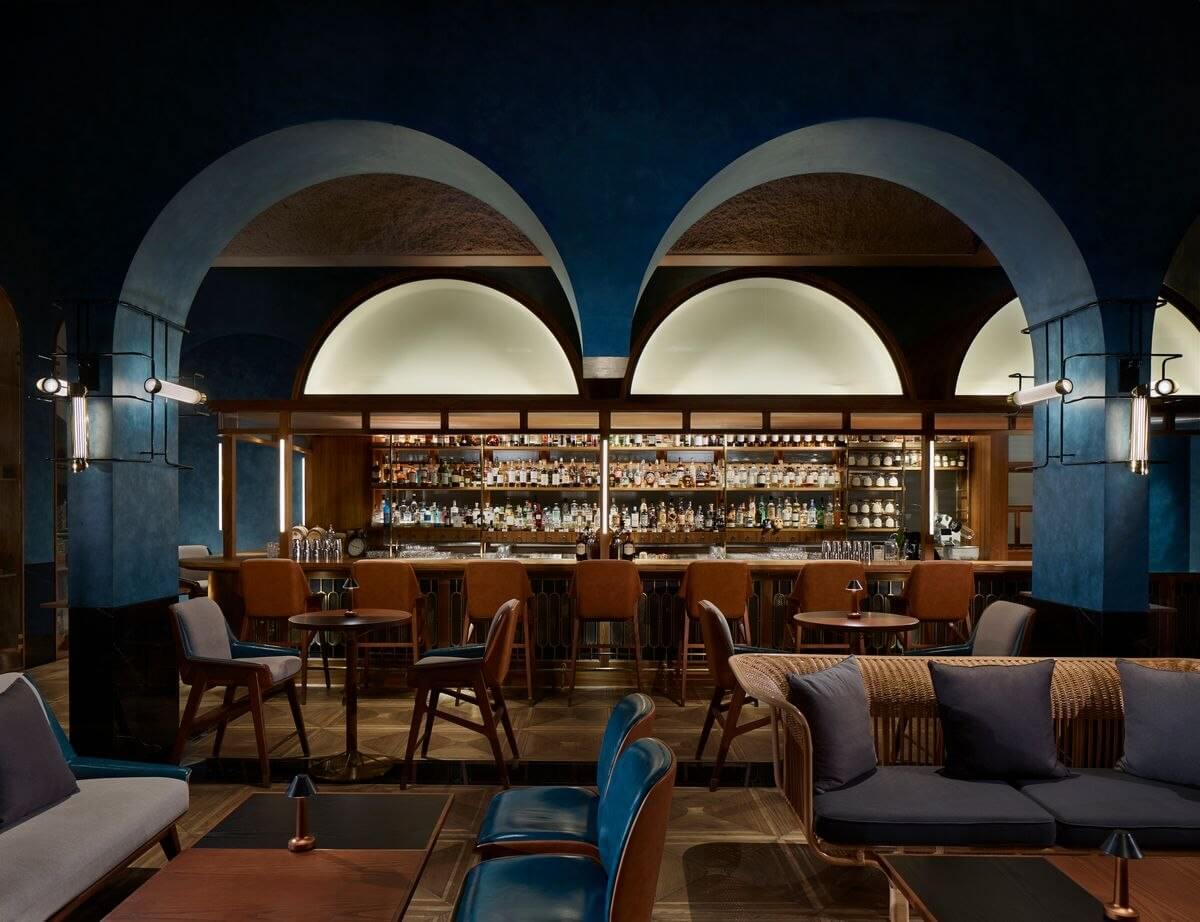
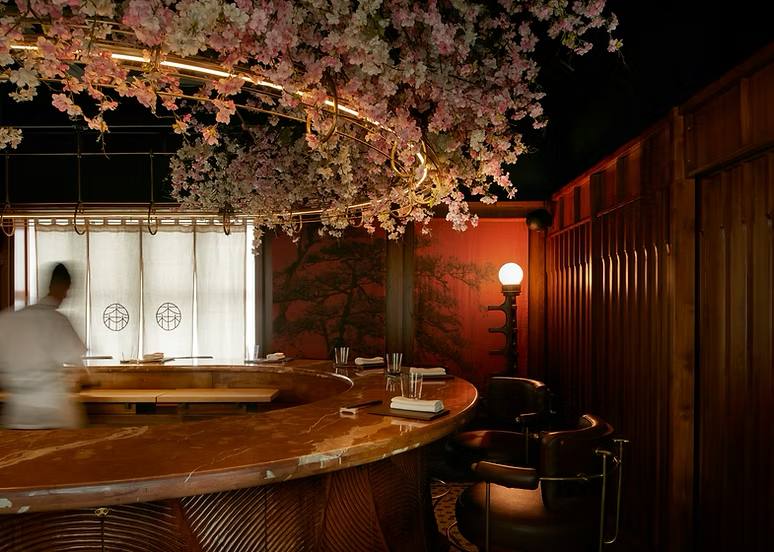
When NAE:UM closed for its 2025 transformation, the obvious assumption from the outside was that Chef Louis Han was changing course. He wasn’t. The concept, he’s careful to clarify, never changed — what changed was the physical space, rebuilt around a sinhanok-inspired design, and the way the menu is now told. Where NAE:UM’s earlier iterations unfolded episodically, the current menu reads more like a storybook, threading together the moments, emotions and memories that shaped his culinary identity into a single continuous narrative.
This distinction matters more than it first appears. In an industry where “reinvention” is often used to justify chasing whatever trend currently has cultural momentum, Han’s version of evolution is disciplined rather than reactive: the foundation stays fixed, and only the expression of it deepens. It’s a distinction that separates chefs building a lasting body of work from those simply reacting to the market.
What eleven years in Singapore actually changes about a cuisine
Han’s approach to Korean cuisine is shaped by something specific: eleven years of living and cooking in Singapore, which has led him to fold Southeast Asian ingredients, flavours and techniques into food that remains unmistakably Korean at its root. The result, in his own words, is food that guests “find familiar in some ways” while encountering “flavours and combinations they may not have tasted before.”
This is a more sophisticated approach to fusion than the term usually implies. Rather than diluting Korean cuisine to make it more palatable, Han is using a second culinary vocabulary — built from over a decade of immersion, not tourism — to extend what Korean food can express. It’s the kind of authority that only comes from genuine, sustained residence in a place, not a menu built around borrowed ideas for novelty’s sake.
Confronting the misconception head-on
Han is direct about what he sees as the industry’s most persistent misunderstanding: that Korean food begins and ends with spice and kimchi. His menu is, in part, an argument against that flattening — an insistence that Korean cuisine contains “a much wider range of flavours, ingredients and cooking techniques” than most diners outside Korea have had the chance to encounter.
Nowhere is that argument made more pointedly than through samhap — fermented skate, boiled pork belly and aged kimchi served together, built around a flavour Han himself describes as “extremely pungent” and not immediately accessible to most palates. Rather than removing it to protect guest comfort, he keeps it on the menu specifically because it represents something real about Korean food culture worth encountering, even when it challenges expectation. That’s a meaningful signal about where Han sits as a chef: unwilling to simplify his cuisine for approval, even at the highest end of Singapore’s dining scene.
Nothing is retired — only reimagined
One of the more revealing things about how Han runs his kitchen is his refusal to think of past dishes as permanently gone. Dishes may disappear from the menu for a period, he explains, but nothing is discarded for good — everything remains available to return “in a new way when the right time comes.” This year’s Five Years menu makes that philosophy explicit, deliberately bringing back guest favourites from NAE:UM’s earlier episodic menus, reworked rather than simply reprinted.
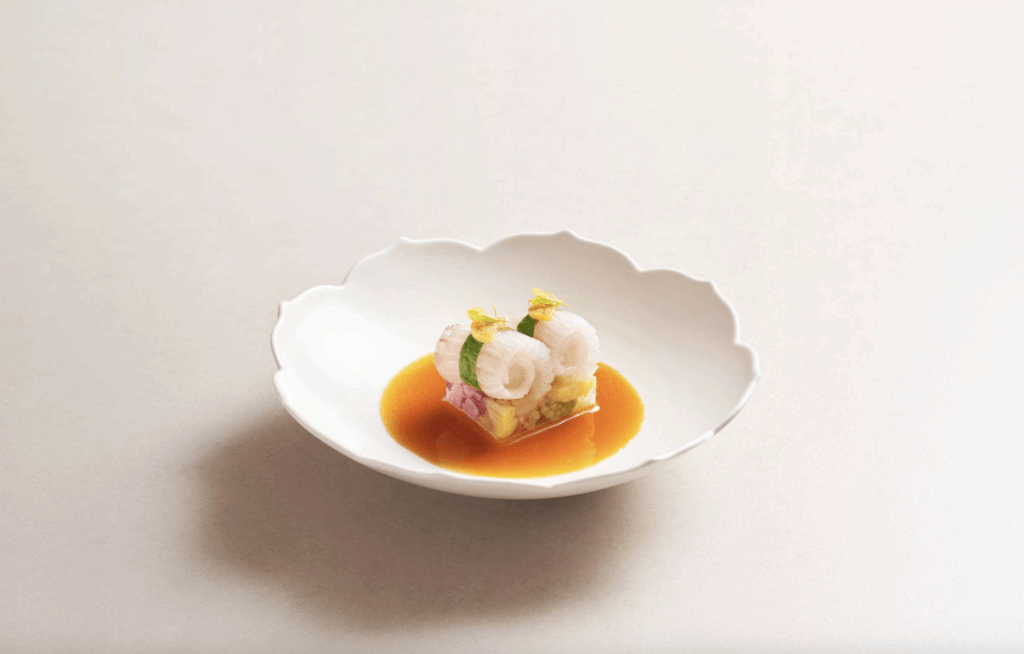
The clearest expression of this principle is Memilmyeon, a dish that has remained on the menu since NAE:UM first opened. Its base dressing has never changed. Everything surrounding it — the toppings, the accompanying elements — has evolved continuously. Han points to this dish specifically as the one that best represents the restaurant today, precisely because it embodies the tension his entire practice is built around: an identity that stays fixed while its expression keeps maturing.
Elevating what was once considered ordinary
Han’s rice course, built around premium Hanwoo beef, carries a piece of Korean culinary history that most diners wouldn’t recognise on sight. Historically, beef was a prized, scarce ingredient in Korean households, reserved for celebrations and honoured guests. At NAE:UM, that same reverence is extended to every diner as a matter of course — the beef simply grilled, seasoned with salt, and served alongside house-made banchan and broth, framed as an act of hospitality rooted in tradition rather than simply a course on a tasting menu.
This is, in miniature, what separates a genuinely considered kitchen from one merely performing refinement: the ingredient isn’t chosen for its price point or prestige value, but because it carries a story worth telling correctly.
What NAE:UM’s discipline says about excellence more broadly
For Singapore’s community of collectors, entrepreneurs and family offices — an audience fluent in evaluating what separates durable value from passing trend across art, watches and gemstones — Han’s approach to running a Michelin-starred kitchen offers a familiar structural lesson. The kitchens, collections and businesses that endure aren’t the ones that reinvent themselves with every cycle. They’re the ones that know precisely which elements are foundational and non-negotiable, and which can be continuously refined without ever compromising the whole.
NAE:UM changed its walls, its presentation, and its narrative structure in 2025. Its convictions — about heritage, about honest flavour, about refusing to flatten Korean cuisine for easier consumption — never moved. That distinction, more than any single dish on the menu, is the real discipline behind the restaurant’s five years, and arguably the clearest definition of excellence this publication has encountered yet.