
Secondary market spreads and sell-through times: Rolex Daytona and Patek Nautilus in Singapore and Hong Kong
A steel Daytona and a Nautilus behave nothing like ordinary luxury goods in either city — but Singapore and Hong Kong price the same scarcity differently, for reasons that have more to do with tax and dealer regulation than with demand itself. This is a look at how the spread between retail and secondary price actually forms across the two markets, and what that gap tells a buyer about where to transact.
The market backdrop, briefly
Before comparing cities, the broader direction matters. WatchCharts’ Q1 2026 data shows the global secondary watch market gained 1.9% in its fifth consecutive quarter of growth, with 71% of tracked brands now positive — a recovery led in part by the Patek Nautilus and Aquanaut segment rebounding after a prolonged softening period. Against that backdrop, both the Daytona and Nautilus remain firmly in the category of watches where secondary price sits meaningfully above retail, rather than converging toward it as many references have over the past two years.
Why Singapore and Hong Kong price the same watch differently
The core structural difference between the two markets isn’t collector appetite — both cities have deep, sophisticated buyer pools — it’s tax and regulatory architecture. Singapore applies 9% GST to secondary transactions, which pushes headline pricing on a pre-owned Daytona 126500LN noticeably higher on paper than the equivalent watch in Hong Kong, which has no comparable sales tax. Read in isolation, that would suggest Hong Kong is simply the cheaper place to buy. It isn’t quite that straightforward.
Singapore’s secondary market operates under considerably stricter dealer regulation, which functions as a de facto quality filter. Local dealer inventory tends to carry a higher concentration of “full set” watches — original box, papers and authorised-dealer documentation — which commands its own premium precisely because that provenance materially reduces resale risk down the line. Hong Kong’s grey market, by contrast, is described by regional dealers as vast and fast-moving, but that speed carries a documented cost: a higher prevalence of “Franken-watches,” pieces assembled from parts across multiple examples, or watches with undisclosed service replacements that only surface under expert inspection. Dealers serving both markets report a growing number of Hong Kong-based collectors specifically seeking out Singapore counterparties for six-figure transactions, precisely because of this authentication gap.
Where the Daytona actually sits
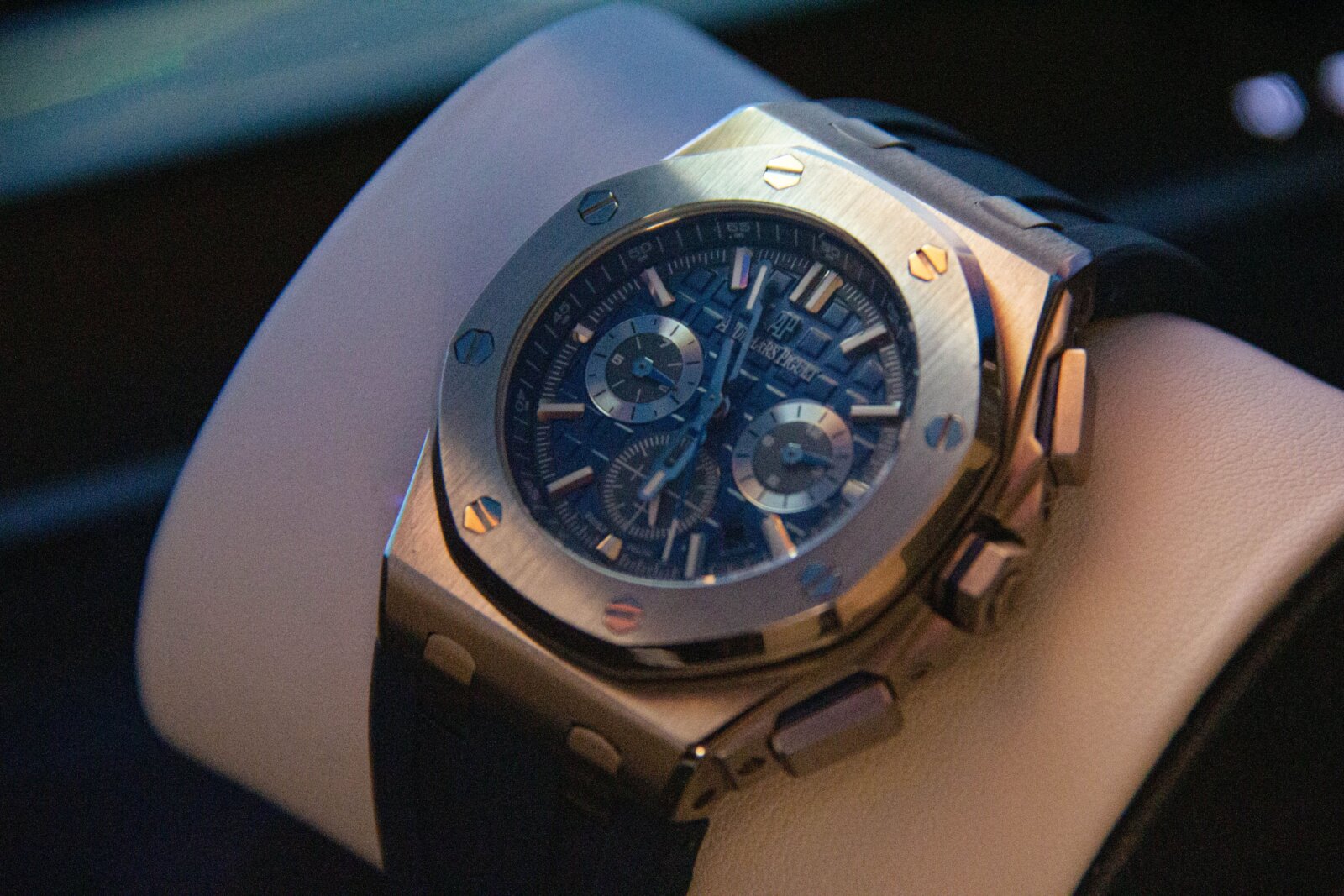
The steel Daytona remains one of the clearest cases of a watch priced almost entirely by waitlist length rather than list price. In Singapore, demand from the watch consistently outstrips supply, reinforced by steady cross-border appetite from Indonesian and Malaysian buyers who use Singapore as a regional transaction point — a dynamic that keeps the local floor price notably higher than in the US or European secondary markets. Locally, the Daytona has developed something close to a cultural function beyond horology: dealers describe an “exit watch” mentality among Singaporean collectors, where the Daytona is treated as the final, culminating acquisition in a collection rather than an entry point.
This matters for sell-through time specifically. A watch bought as an “exit” piece is, by definition, held rather than flipped — which tightens available secondary supply further and helps explain why Daytona premiums have proven unusually resilient through broader market softening in other steel sports references over the past two years.
Where the Nautilus actually sits
The Nautilus tells a related but distinct story. Reference-specific pricing varies considerably — the discontinued steel 5711/1A commands a materially different premium than the white gold 5811/1G that effectively replaced it in Patek’s current catalogue — but the through-line across both references and both cities is that secondary values remain significantly above retail, even after the broader 2023–2024 softening cycle that affected the wider Patek and AP secondary market. The Q1 2026 recovery WatchCharts identified specifically calls out the Nautilus and Aquanaut segment as a leading contributor to that quarter’s gains, suggesting the reference has moved through its correction faster than comparable references from other houses.
What the spread actually tells a buyer
The practical lesson from comparing these two markets isn’t “Hong Kong is cheaper” or “Singapore is safer” in isolation — it’s that the effective cost of a watch includes authentication risk as a real, quantifiable variable, not a footnote. A Hong Kong price that looks meaningfully lower before tax can be more expensive in practice if it requires additional third-party authentication, carries resale uncertainty from undisclosed parts history, or takes materially longer to sell through because a buyer several steps down the chain discounts for provenance risk. Singapore’s higher headline price, in many cases, is functioning as a premium for verified full-set provenance and a more heavily regulated dealer environment — a cost that shows up specifically in faster, more confident resale later.
What this means for a Singapore-based collector
For collectors and family offices treating watches as a genuine store of value rather than a purely aesthetic purchase, the Singapore-Hong Kong spread on the Daytona and Nautilus is a useful, concrete illustration of a broader principle already familiar from this publication’s coverage of grey-market Patek and AP pricing more generally: the waiting list and the spread are not obstacles to be arbitraged away by shopping the cheapest jurisdiction. They are the market’s own pricing mechanism for the two things that actually determine long-term value — genuine scarcity, and verified provenance. A buyer chasing the lower headline number across the strait without accounting for both is very often paying for the discount later, in a slower, less certain sale.