
Pearls as an asset: what separates the four most valuable varieties
Why can one pearl necklace command a few thousand dollars while another achieves millions at auction? From natural pearls with royal provenance to exceptional South Sea, Tahitian and Akoya specimens, the answer lies in rarity, gemmological quality and the characteristics that influence collector demand.
Unlike gold, pearls have no standard market price, and unlike diamonds, their valuation depends on a particularly complex combination of biological origin, lustre, surface quality and historical significance. According to the Gemological Institute of America (GIA), seven factors determine pearl quality: size, shape, colour, lustre, surface condition, nacre quality and matching. Understanding how these characteristics operate across different varieties helps explain why certain pearls achieve exceptional prices while others remain primarily decorative purchases.
Natural pearls: when provenance becomes part of the value
Natural pearls are formed without human intervention, making exceptional specimens significantly rarer than cultured alternatives. Historically, finding enough closely matched natural pearls to create a necklace could require years of sourcing. Their rarity is particularly pronounced in large, symmetrical specimens with strong lustre, while documented ownership can add another layer of collecting significance.
One of the most remarkable examples appeared at Sotheby’s Geneva in November 2018, when an 18th-century natural pearl and diamond pendant belonging to Marie Antoinette sold for CHF 36.427 million. According to Sotheby’s, the result exceeded its CHF 1–2 million presale estimate by more than 18 times at the lower end, establishing an auction record for a natural pearl. The entire collection of ten jewels associated with the queen achieved CHF 43.1 million, illustrating the extraordinary premium that historical provenance can command.
However, this result should not be interpreted as evidence of universal appreciation across the natural pearl market. The pendant’s royal ownership, historical documentation and exceptional rarity made it a unique collecting opportunity. For other natural pearls, independent identification is particularly important: as GIA explains, X-ray microradiography is used to examine internal growth structures and distinguish natural pearls from cultured specimens.
South Sea pearls: the economics of exceptional size
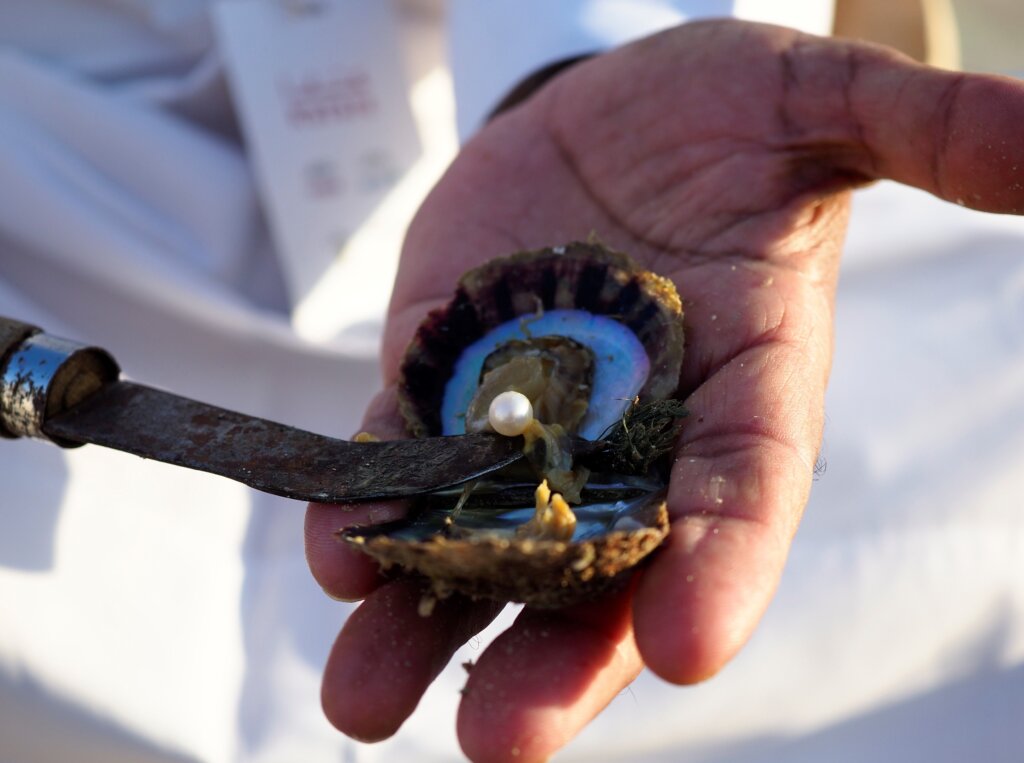
South Sea pearls are among the most prestigious cultured varieties, produced by the large Pinctada maxima oyster in Australia, Indonesia and the Philippines. According to GIA, their typical size is approximately 9–16 mm, although exceptional examples can be larger. Their substantial dimensions, combined with characteristically soft, satiny lustre, distinguish them from smaller cultured varieties.
Two colour groups dominate this market. White and silver South Sea pearls are strongly associated with Australian production, while golden pearls are particularly important in Indonesia and the Philippines. Within the golden category, deeply saturated natural colour can command a premium, especially when combined with an exceptionally round shape, clean surface and high-quality nacre.
The economics of South Sea pearls are influenced by the time and biological conditions required to produce them. Unlike mass-produced jewellery components, each pearl develops within a living oyster, and maintaining consistent quality across a harvest is difficult. GIA identifies South Sea pearls as generally commanding the highest prices among the major cultured pearl categories, reflecting their size, growing conditions and comparatively limited supply. Yet size should never be considered in isolation. A 15 mm pearl with visible blemishes or poor lustre may be less desirable than a smaller specimen of exceptional quality. This distinction becomes particularly important when assessing expensive strands, where matching numerous large pearls can represent a substantial component of the finished piece’s value.
Tahitian pearls: why natural colour commands a premium
Tahitian pearls, cultivated primarily in French Polynesia, are distinguished by their naturally dark body colours and complex optical effects. Produced by the black-lipped Pinctada margaritifera oyster, they commonly measure between 8 and 14 mm, according to GIA. Although frequently marketed as black pearls, their actual colours range from charcoal and silver to greenish and brown tones, often accompanied by contrasting overtones.
The most sought-after examples can display the so-called peacock effect, in which green body colours combine with rose or purple overtones. According to GIA’s pearl classification guidance, colour evaluation must distinguish between bodycolour, overtone and orient — the iridescent play of colour visible on or beneath the pearl’s surface. These characteristics can substantially influence desirability, but they cannot compensate entirely for poor lustre or visible surface damage.
For collectors, colour authenticity is another important consideration. Pearls can undergo treatments designed to alter their appearance, making it essential to establish whether a valuable colour is natural. GIA’s laboratory services include identification of detectable treatments, while CIBJO provides internationally recognised guidance on pearl terminology and classification. The strongest Tahitian specimens therefore combine natural colour, high lustre and exceptional surface quality. For Singapore’s jewellery collectors, they also provide an alternative to conventional white pearl strands, with considerable potential for distinctive contemporary designs.
Akoya pearls: when precision outweighs size
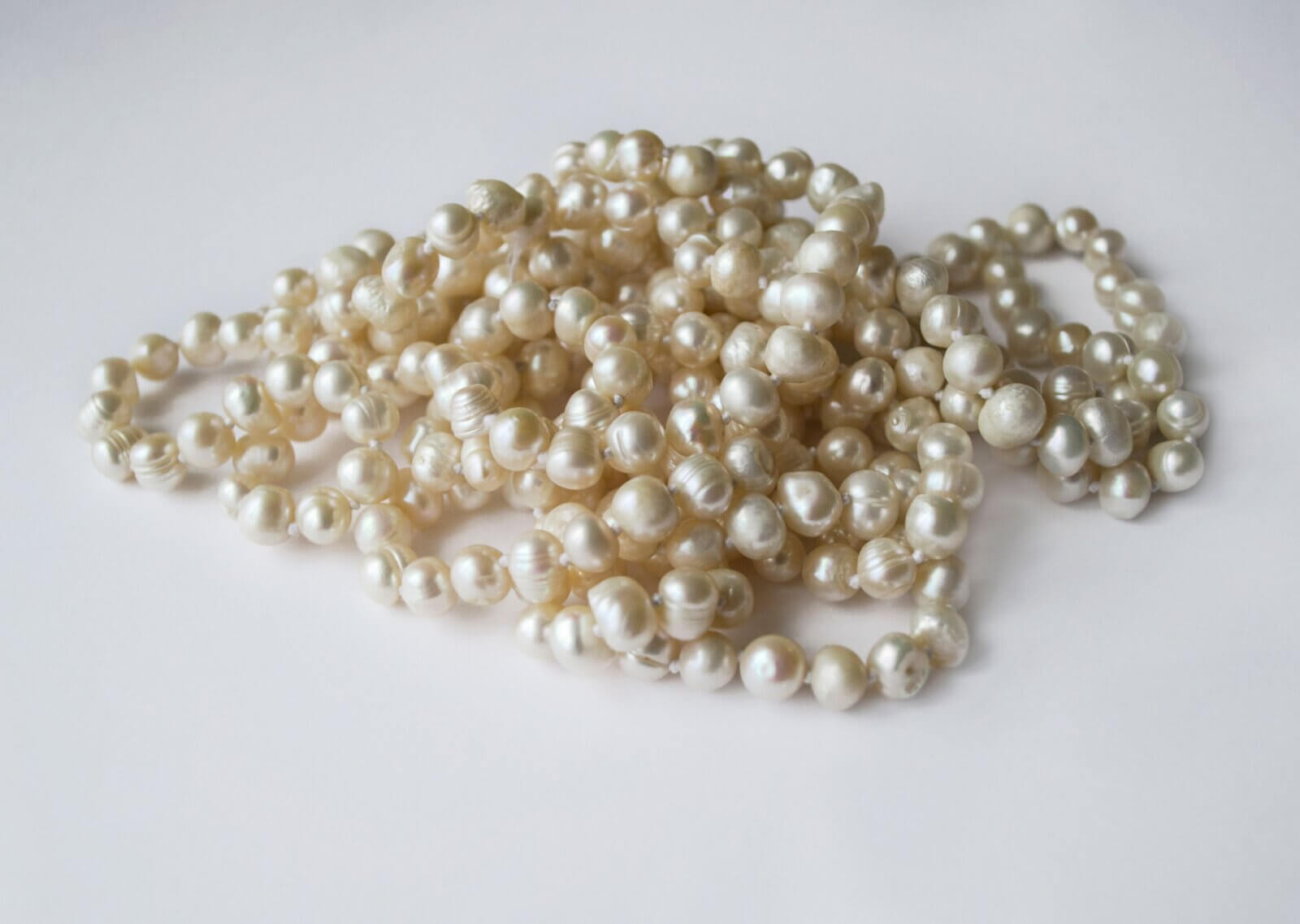
Japanese Akoya pearls demonstrate that larger dimensions do not necessarily translate into greater desirability. Typically measuring 6–9 mm, they are prized for their roundness and unusually sharp, mirror-like lustre. According to GIA, the fine structure of their nacre contributes to this distinctive brilliance, which separates high-quality Akoya pearls from the softer appearance associated with many South Sea specimens.
The premium end of the Akoya market is represented by Hanadama-quality pearls, a Japanese trade designation associated with exceptional lustre, nacre and surface characteristics. GIA introduced recognition of qualifying Hanadama pearls in its classification reports in 2023. Its criteria include round to near-round shape, white body colour, excellent lustre and strict requirements for surface quality and matching.
This is particularly relevant for collectors of pearl necklaces, where uniformity becomes a significant measure of craftsmanship. Selecting dozens of pearls with closely matched dimensions, lustre and colour can be considerably more demanding than evaluating an individual specimen. Consequently, an exceptional Akoya strand may justify a meaningful premium over larger but less consistent jewellery.
What determines investment potential?
According to CIBJO, accurate classification and consistent terminology are fundamental to evaluating natural and cultured pearls. GIA similarly emphasises that quality assessment requires consideration of all seven value factors rather than a single characteristic. Its identification and classification reports can document pearl type, quality and detectable treatments, providing important evidence for buyers considering high-value acquisitions.
Unlike conventional financial assets, pearls lack transparent secondary-market pricing and may be difficult to resell at their original retail value. Brand premiums, jewellery settings, transaction costs and changing collector preferences can all affect returns. Their strongest long-term appeal therefore lies in acquiring exceptional, independently documented specimens whose rarity and quality can be demonstrated beyond the original point of sale.