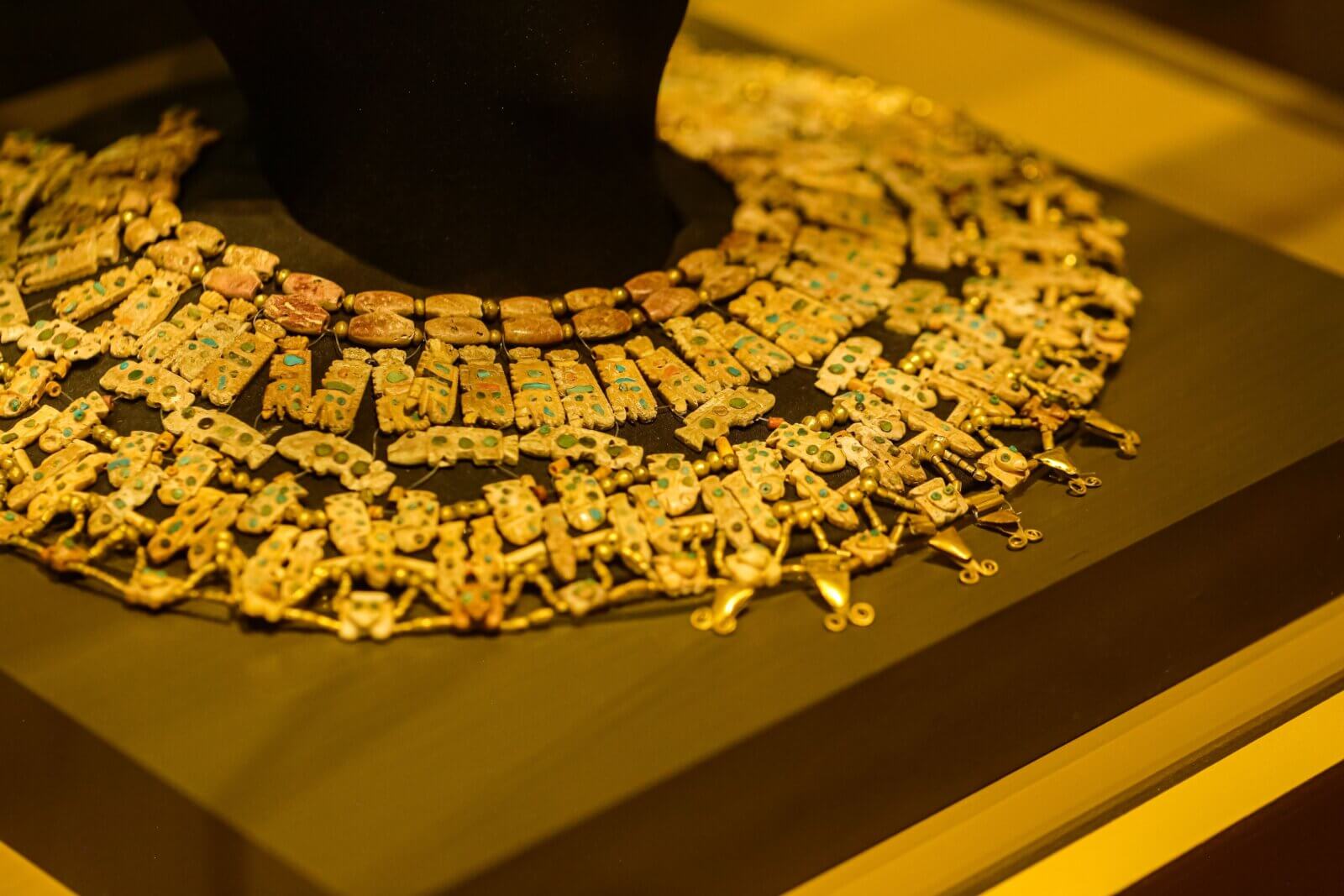

Before Gold, There Were Beads How Humanity’s Earliest Ornaments Invented the Idea of Worth
Long before agriculture, cities or writing, humans were already drilling holes into seashells to wear them on their bodies. For collectors and investors accustomed to valuing objects through rarity and provenance, this ancient habit isn’t a curiosity — it’s the origin story of why jewelry remains one of history’s most enduring asset classes.
A Shell Older Than Writing Itself
In Bizmoune Cave, on Morocco’s southwestern coast, archaeologists uncovered 33 beads made from sea snail shells dated between 142,000 and 150,000 years old — the oldest known jewelry in human history. Each bead has a carefully drilled hole, and some still carry traces of ochre, the pigment early humans used to decorate their bodies. The discovery pushed back scientists’ understanding of symbolic human behaviour by 10,000 to 20,000 years.
The point worth sitting with: humans were making jewelry long before they learned to farm wheat, build cities, or write anything down. Jewelry isn’t a byproduct of civilisation. It predates civilisation itself.
Why Decorate a Body That Needs to Survive, Not Shine
From a purely survival standpoint, spending hours drilling a hole into a shell with a stone tool is entirely irrational. Yet people did it independently, across continents. Anthropologists broadly agree: jewelry was never only about beauty. It was one of humanity’s earliest communication systems — a way to signal age, group belonging, marital status, wealth, occupation or spiritual belief without a single spoken word.
This is a meaningful shift in how to think about human nature. People don’t only make functional things — they make meaningful things. Material culture becomes a language of identity long before spoken or written language exists in any formal sense.
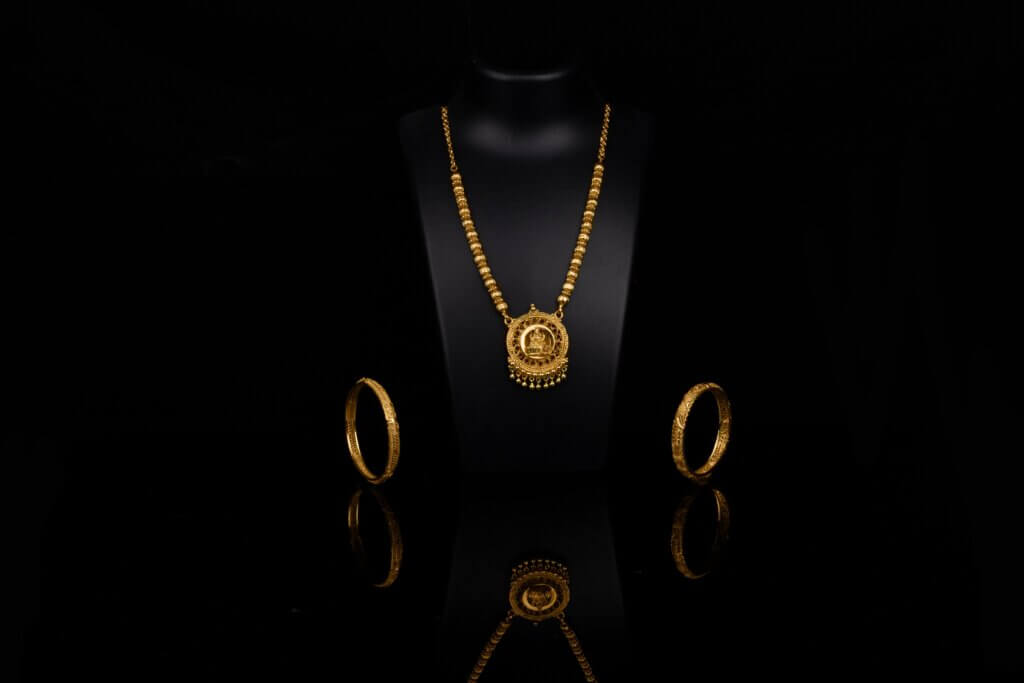
From Shell to Wedding Ring: The Function Never Changed
What’s most striking isn’t the archaeology itself, but how unchanged the function has remained across 150,000 years. Materials shifted — from shell to gold, from gold to diamond — but the underlying task stayed identical. A wedding ring tells a story before a single word is spoken. Inherited earrings carry genealogical, not just aesthetic, weight. A university ring or family heirloom becomes a form of identity literally worn on the body.
For a collector, this observation has direct practical relevance. The value of a piece of jewelry has never been purely about material or cut — it has always included context: who owned it, what it symbolised, what story it carried. That’s precisely why provenance has historically mattered in fine jewelry as much as clarity or carat weight.
Why This Matters for the Jewelry Market Today
Understanding jewelry as humanity’s oldest symbolic system explains why this category has remained resilient as an investment class even through periods of economic turbulence. Unlike many luxury categories where demand is shaped by trend cycles, demand for jewelry is rooted in something considerably more fundamental — the human need to express identity and belonging through a physical object. This isn’t a trend capable of falling out of fashion; it’s a behavioural pattern documented 150 millennia before the concept of fashion existed.
Singapore, strengthening its position as one of Asia’s key hubs for gemstone and jewelry trade — from its freeport infrastructure to the growing presence of exhibitions such as the Singapore International Jewellery Expo — is, in effect, continuing the same story that began in a cave on Morocco’s coast: an organised, institutionalised way of assigning meaning and value to objects people choose to wear.
Value, Encoded in the Object
For a collector or investor in luxury assets, this ancient history isn’t simply an interesting fact for dinner conversation. It explains why jewelry as a category holds a uniquely durable emotional and cultural weight — one that translates into long-term value retention. People don’t buy a diamond purely because it’s rare. They buy what the diamond is capable of saying about them — the same thing thirty-three shells said about their owner 150,000 years ago.
Jewelry remains, arguably, humanity’s oldest language — one still spoken today, simply with a far more sophisticated vocabulary.