
GIA vs SSEF vs Gübelin: what actually gets checked on coloured stones above S$50,000 in 2026
Above roughly S$50,000, a single lab report stops being sufficient, and the choice of laboratory stops being a formality. This is a look at what each of the world’s leading gemological labs actually verifies, why their calls on origin can differ on the identical stone, and what serious buyers and auction houses require before real money changes hands.
Why one certificate stops being enough
Dealers who move real inventory describe a consistent rule of thumb: for stones under roughly $50,000, one strong report — GIA or a comparable domestic lab — is generally sufficient for the retail market. Above that threshold, the rules change. For anything being consigned to auction or sold internationally, the standard becomes two reports minimum, typically SSEF paired with Gübelin, or SSEF paired with GIA. At the level Singapore’s collector base increasingly transacts in, a single certificate is treated as an opening position, not a closing argument.
The reason isn’t bureaucratic caution — it’s that different labs are built to answer different questions, and at high values, buyers need answers to all of them.
What each lab is actually built to do
GIA set the global grading standard for diamonds, and its coloured-stone reports remain widely respected for treatment disclosure and basic identification. But GIA’s core competency, by its own design and by trade consensus, is diamonds. For coloured stones specifically, GIA does not routinely provide the geographic origin determination that drives real premium pricing, and where it does issue origin opinions, it is notably more conservative than its Swiss counterparts — GIA treats origin determination as probabilistic and will sometimes return a “no origin” verdict on a stone that a Swiss lab would confidently attribute to a specific source.
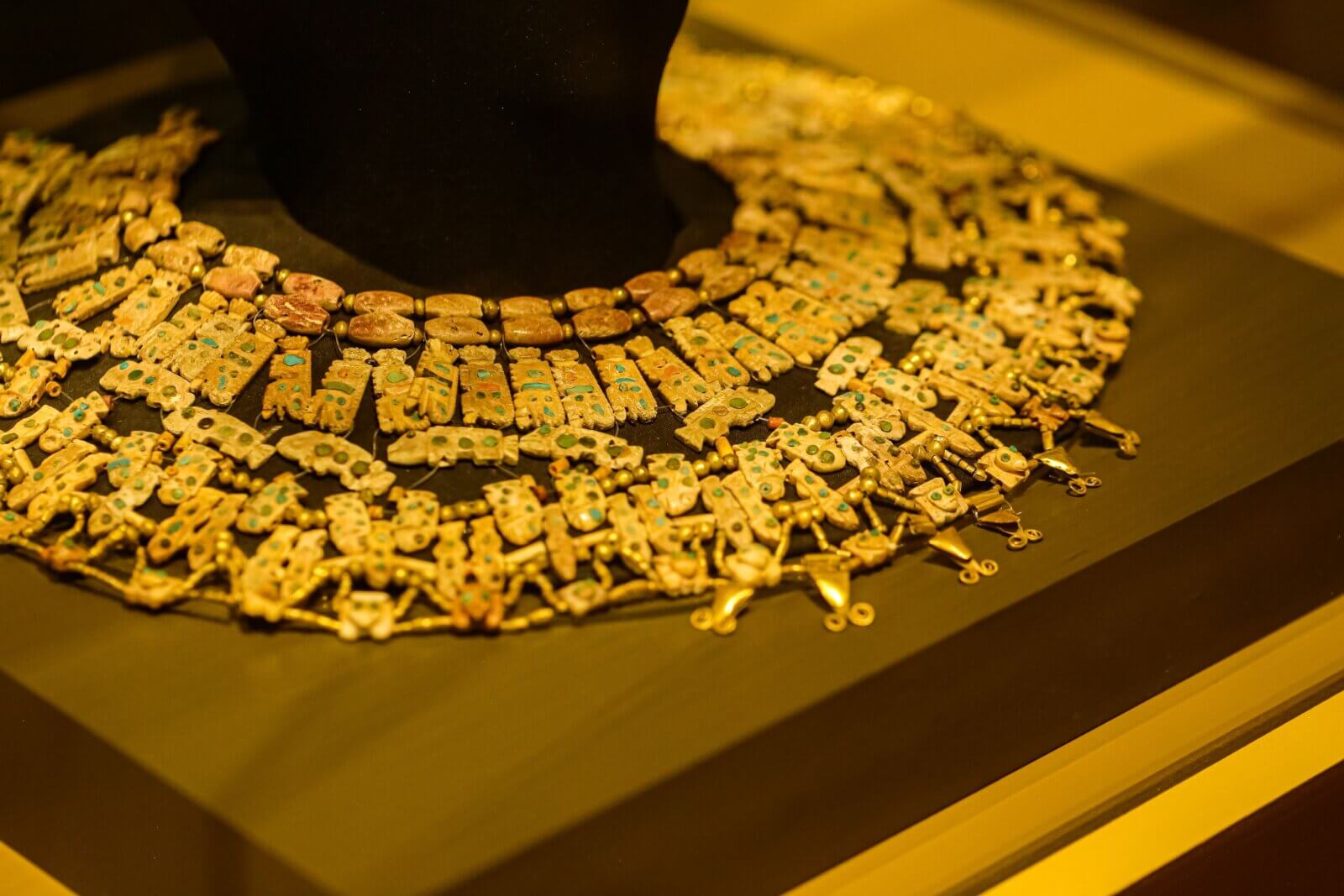
SSEF (Swiss Gemmological Institute, Basel) and Gübelin Gem Lab (Lucerne) occupy the opposite end of that spectrum. Both are research-led institutions that have spent decades building physical reference collections of stones taken directly from documented mines, alongside chemical fingerprinting and inclusion databases used to attribute a stone’s likely geographic source. Gübelin’s origin work traces back to the 1920s and Dr. Eduard Gübelin’s foundational research on gem inclusions — work that effectively created the modern discipline of provenance gemology. SSEF is similarly regarded as a reference point for confirming unheated status in ruby, sapphire and emerald, and its calls on origin and treatment sit at the top of the market’s trust hierarchy for European auction material.
A third name matters specifically for the American market: AGL (American Gemological Laboratories), whose Prestige Gemstone Report is the domestic standard, offering qualitative colour grading and detailed treatment classification that buyers without a mineralogy background can actually parse.
Why two labs can examine the same stone and disagree
The disagreement between labs isn’t a scandal — it’s a documented feature of how origin determination works. A Kashmir sapphire can be worth many multiples of an otherwise identical Ceylon stone; Burmese “pigeon blood” ruby carries a comparable premium over Mozambican material of similar visual quality. Because that premium hinges entirely on a probabilistic scientific call rather than a certainty, GIA’s more conservative methodology and the Swiss labs’ willingness to attach a specific origin can produce genuinely different verdicts on the same physical stone. This is precisely why serious dealers describe getting two reports as insurance rather than redundancy — a second lab either confirms the premium-justifying origin call or reveals that it doesn’t hold up under a different lab’s methodology, before a client pays for it.
Trade-specific colour terminology adds another layer worth understanding. GIA’s coloured-stone reports do not use terms like “pigeon blood” or “royal blue” that dealers and auction houses price against directly — those descriptors are the domain of GRS and the Swiss labs specifically, meaning a GIA report alone may accurately grade a stone while still leaving out the exact vocabulary the market uses to set its price.
What auction houses actually require
This is not a theoretical distinction. SSEF and Gübelin are the labs Christie’s and Sotheby’s specifically prefer for high-value coloured stone lots, and dealers note plainly that GIA reports are rarely attached to top coloured-stone lots at Christie’s Geneva or Sotheby’s Magnificent Jewels sales — not for political reasons, but because the auction market’s pricing depends on the specific origin and treatment calls only the Swiss labs are built to make with the authority buyers require.
The practical checklist above S$50,000
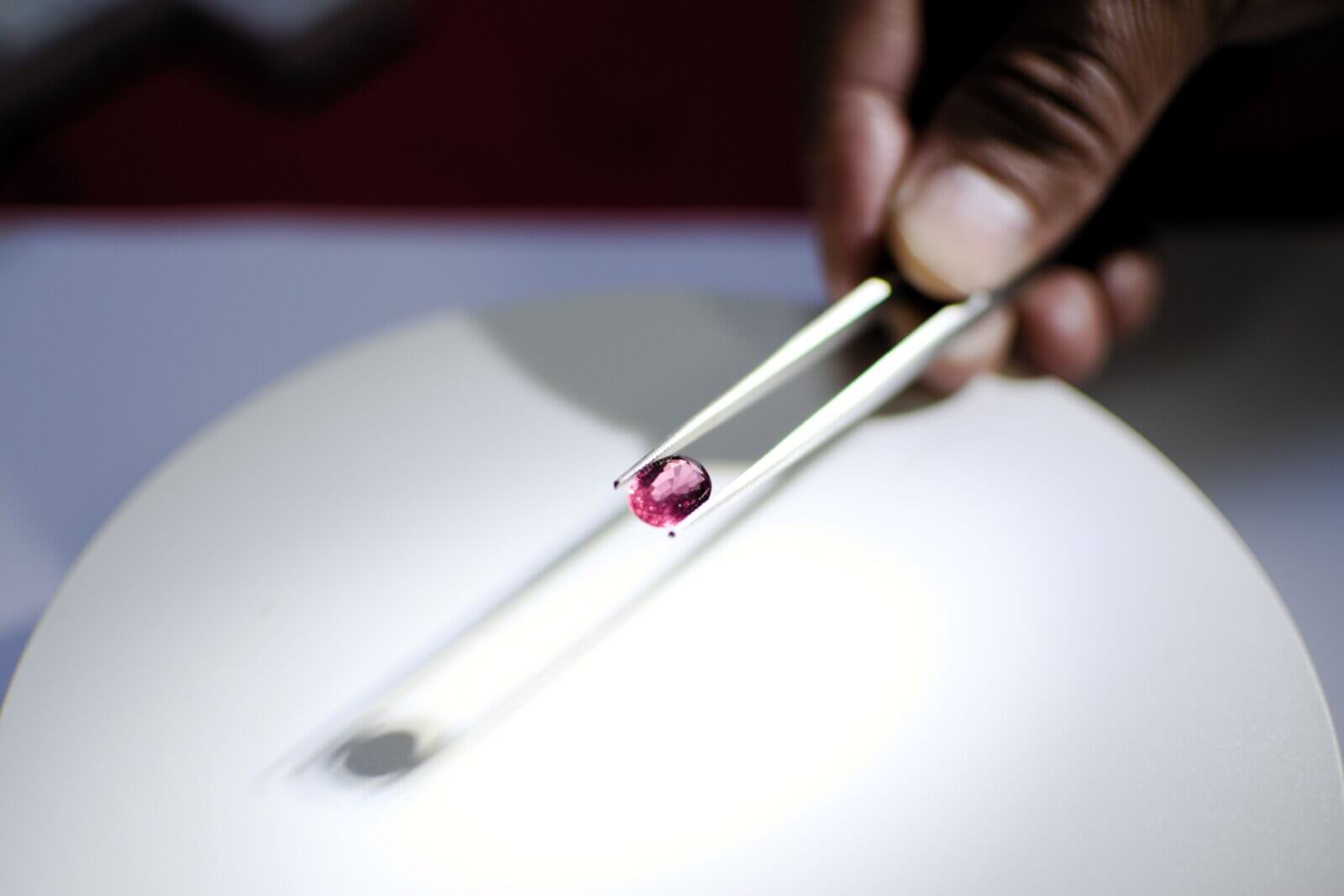
For a Singapore-based buyer or family office considering a coloured stone at this level, the due diligence sequence should run in a specific order. First, confirm species and treatment status — is the colour natural, heated, or diffusion-treated — since this alone can swing value by as much as 90% on stones like padparadscha sapphire. Second, for any stone where geographic origin materially affects price (Kashmir, Burma, Colombia, Ceylon), insist on a report from SSEF or Gübelin specifically, not a general identification report from a domestic lab. Third, at genuinely significant values, commission a second report from a different one of the recognised labs — the cost of a second certificate is trivial against the risk of paying a Kashmir premium on a stone that doesn’t sustain that attribution under independent review.
The broader point for Singapore’s collector base
Singapore’s position as a regional hub for gemstone trade — supported by its own Far East Gemological Laboratory and its proximity to Bangkok’s twice-yearly gem fairs — puts local buyers in a strong position to access this verification infrastructure without friction. But proximity to good labs doesn’t substitute for knowing which lab answers which question. The certificate isn’t a formality attached after a purchase decision is made; above S$50,000, it should be the first document requested, and for anything approaching auction-level value, the second one should be non-negotiable.