
The price of white gold: inside Alba’s multi-thousand-euro truffle market
With early-season quotations reaching €600 per 100 grams, Alba’s white truffle has entered autumn 2026 at prices that rival some of the world’s most expensive dining experiences. Behind the headline figures lies a market shaped by weather, specialist knowledge and an ingredient whose supply cannot be increased to meet demand.
A market where every gram counts
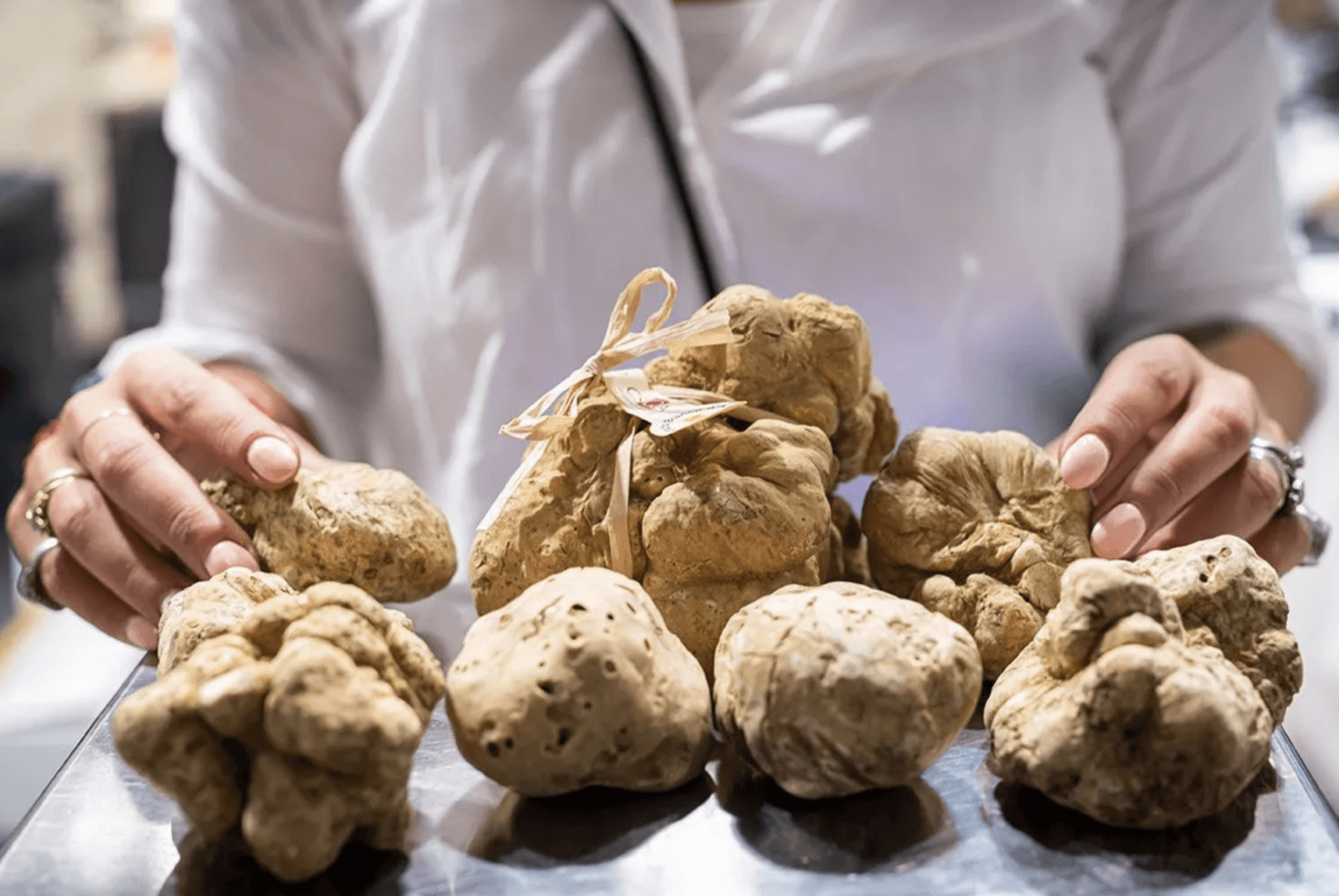
In Alba, a white truffle is priced by weight, but its value depends on far more than the number on the scales. During the opening weeks of the 2026 season, quotations reported across the local market ranged from approximately €350 to €600 per 100 grams, equivalent to €3,500–6,000 per kilogram. According to a market review published by Sharp Voyage on 26 October 2026, the range reflects differences in specimen size, quality and point of sale. The largest pieces can command a substantial premium, while prices paid directly to hunters may be considerably lower than retail quotations.
The species at the centre of the market, Tuber magnatum Pico, grows underground in association with the roots of particular trees. Unlike many premium food products, it cannot be cultivated reliably at commercial scale. Hunters use trained dogs to locate mature specimens in the forests of Piedmont, but the quantity available depends on natural conditions. A poor harvest cannot simply be corrected by increasing production, and a sudden rise in demand can put immediate pressure on prices.
The market also operates against a short biological clock. White truffles are highly perishable, and their distinctive aroma is central to their appeal. Restaurants must account for cleaning, storage, trimming and waste, while diners often encounter the ingredient in small quantities shaved over pasta, risotto or eggs. A serving may weigh only a few grams, yet the cost of sourcing an exceptional specimen can materially affect the price of a dish.
Weather sets the price
The 2026 season opened after a hot, dry summer across Piedmont. Early reports from hunters and traders described limited availability, particularly among the more desirable specimens. On 1 October, initial prices in the Alba area were reported at approximately €250–300 per 100 grams, while quotations at the World White Truffle Market on 10 October reached €500–600, depending on size. By 14 October, local reporting placed market prices at around €350–450 per 100 grams for certain categories. These figures come from different sellers and market settings, so they should not be interpreted as a single continuous price index. They nevertheless illustrate how quickly quotations can change during the opening weeks of the season.
Rainfall is one of the variables hunters watch most closely. Moisture can improve growing conditions, but the relationship between weather and price is neither immediate nor guaranteed. Soil conditions, temperature, the timing of rainfall and the stage of the truffle’s development all influence the outcome. Even when the harvest improves, prices may remain elevated if demand rises or the most desirable specimens remain scarce.
Why Alba became the reference point
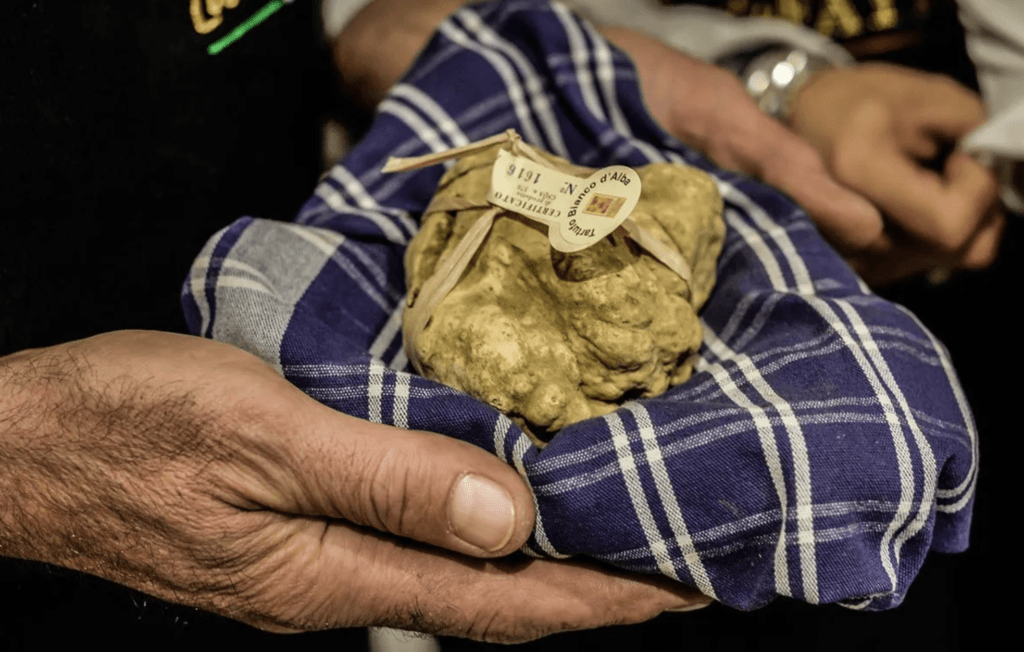
Alba’s reputation extends beyond the ingredient itself. The International Alba White Truffle Fair has created a recognised setting where hunters, traders, chefs, wine producers and visitors meet around the regional harvest. Its World White Truffle Market takes place at the Cortile della Maddalena on Saturdays and Sundays from 10 October to 6 December 2026. According to the official fair programme, the market offers certified white truffles from local hunters and traders, with quality checks carried out by a specialist commission. This matters because the name Alba carries considerable commercial weight, but a geographical association alone cannot establish the quality of every specimen. Freshness, aroma, condition and size remain central to what a buyer receives.
The wider Langhe region strengthens the market’s appeal. Its wine estates, restaurants, hotels and specialist food producers benefit from the attention drawn by the truffle season. Visitors may travel for the ingredient and extend their stay to explore the region’s wines and gastronomy. In this sense, the truffle generates value beyond its sale price, supporting a broader economy built around food, hospitality and place.
The auction and the theatre of rarity
On 8 November 2026, the World Alba White Truffle Auction returns to Grinzane Cavour Castle for its 27th edition. Organised with the involvement of Enoteca Regionale Piemontese Cavour and regional partners, the event pairs exceptional white truffles with wines from the Langhe, Roero and Monferrato. The auction is also a charity event, giving it a purpose beyond ordinary commercial trading. Its results should not be confused with the price of a typical retail purchase. Exceptional specimens can attract bids shaped by philanthropy, prestige, publicity and the circumstances of the event. A record auction result may raise the international profile of Alba’s truffles, but it does not establish a reliable benchmark for every specimen sold at the market.
The distinction is familiar across luxury categories. An exceptional painting or rare watch can achieve a headline-making price without changing the value of every comparable object. With fresh truffles, the variation can be even greater because each specimen differs in size, condition and aroma, and its quality diminishes after harvest.
Scarcity is not the same as investment value
White truffle shares several characteristics with other luxury products: restricted supply, a strong geographic identity, specialist expertise and consumers willing to pay for quality. Yet it differs fundamentally from fine art, collectible watches or rare wine. A fresh truffle is purchased to be consumed, and its defining qualities deteriorate over time. It is not a conventional store of value and does not offer a long-term holding strategy. For affluent consumers, the economics are therefore about access, timing and informed purchasing rather than financial appreciation. Understanding the price per 100 grams, asking about the specimen’s origin and condition, and purchasing through a trusted seller are more useful than assuming that the highest quotation automatically indicates the best product.
For the businesses around Alba, the challenge is to preserve the reputation of the ingredient while maintaining a viable regional market. A poor harvest can increase prices, but it may also limit the quantities available to restaurants and make the product less accessible to visitors. Over time, the market’s strength depends on the health of the local environment, the knowledge of hunters and traders, and the credibility of quality controls.
The season ahead
The Alba World White Truffle Market continues through 6 December, while the regional harvesting season extends beyond the fair. The next major public moment is the auction at Grinzane Cavour Castle on 8 November. Prices may shift as more specimens reach the market, but the direction and scale of any change remain uncertain.
Alba’s white truffle offers a clear example of luxury economics in its most immediate form. Value emerges from a combination of place, expertise, scarcity and a short window of peak quality. Its price may be measured in hundreds of euros per 100 grams, but its reputation has been built over generations. In a market where supply cannot simply be increased to meet demand, the season itself remains the most important variable.