
Why luxury flagships are becoming museums, not stores
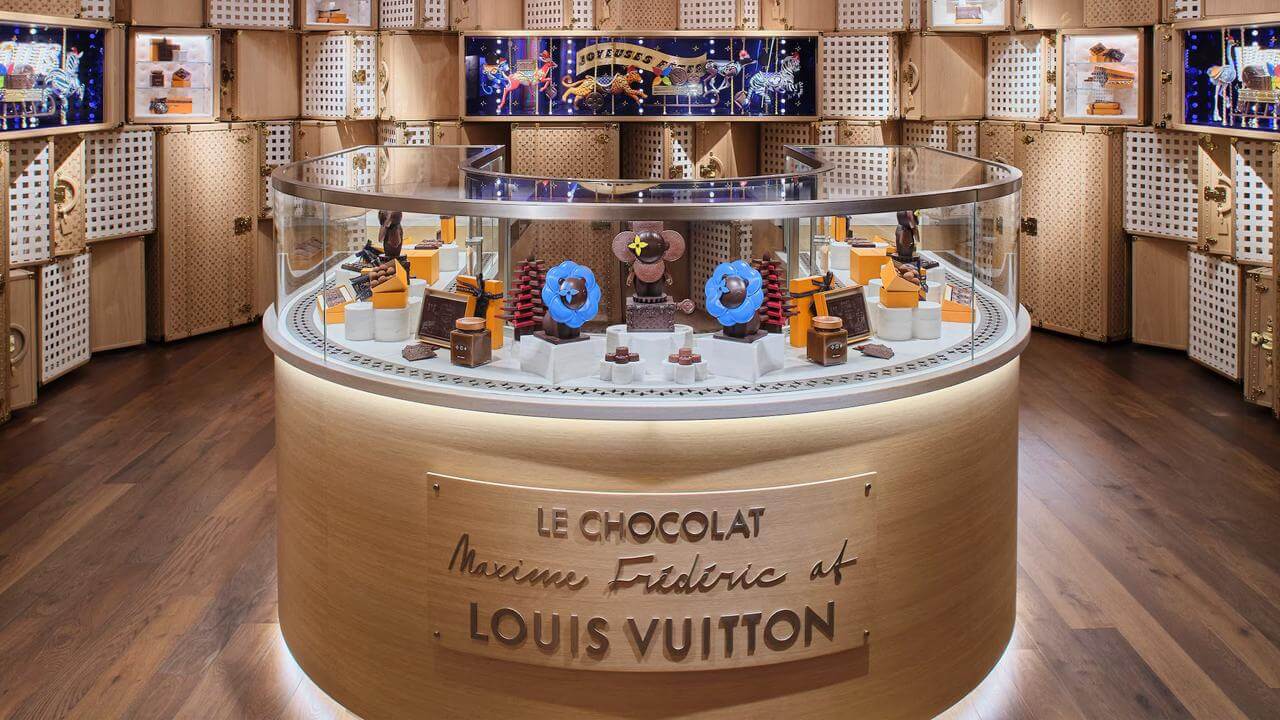
Louis Vuitton’s flagship on the Champs-Élysées now spans 1,800 square metres and includes a travel bookshop worth exploring on its own terms — a space built to be walked through, not just shopped in. This is a look at why the world’s biggest luxury houses are spending architecture-firm budgets on spaces designed to be visited rather than sold from, and what that shift actually protects.
The store that used to be enough
For most of the twentieth century, a luxury flagship’s job was straightforward: hold the largest selection, employ the best-trained staff, occupy the most prestigious address. The building was a container for the merchandise. That model is now visibly dead at the top of the market, and the reason isn’t aesthetic preference — it’s commercial necessity.
Any bag, watch or scarf a flagship sells can now be bought online, often more conveniently, sometimes more cheaply through resale markets. Once the product itself stopped being the differentiator, the physical space had to become one. What’s emerged instead is a genre of retail that industry press now describes plainly as museums that happen to sell things.
What “museum” actually means in practice
The comparison isn’t loose metaphor — it’s structural. Louis Vuitton’s Champs-Élysées flagship at number 101 spans 1,800 square metres combining leather goods, jewellery and a dedicated travel bookshop, in a space explicitly described by design press as one worth exploring for its own sake, independent of any purchase. The brand’s LV Dream exhibition space in Paris goes further still: a journey through the house’s heritage and art collaborations, a café, and only at the end, an exclusive gift shop — retail relegated to the final room of what is functionally a museum exhibition.
The forthcoming Beverly Hills flagship makes the ambition explicit at architectural scale. Frank Gehry — the architect behind the Fondation Louis Vuitton museum in Paris — is designing the building itself, with interiors by Peter Marino, known for his work on Chanel and Dior flagships. LVMH has described the goal as delivering “a full Louis Vuitton lifestyle experience,” complete with a permanent exhibition space and branded restaurants. The same architect who built one of Paris’s most significant contemporary art institutions is now building a shop. That is not a coincidence; it’s a direct statement about what the building is meant to be.
The pattern is now industry-wide, not house-specific
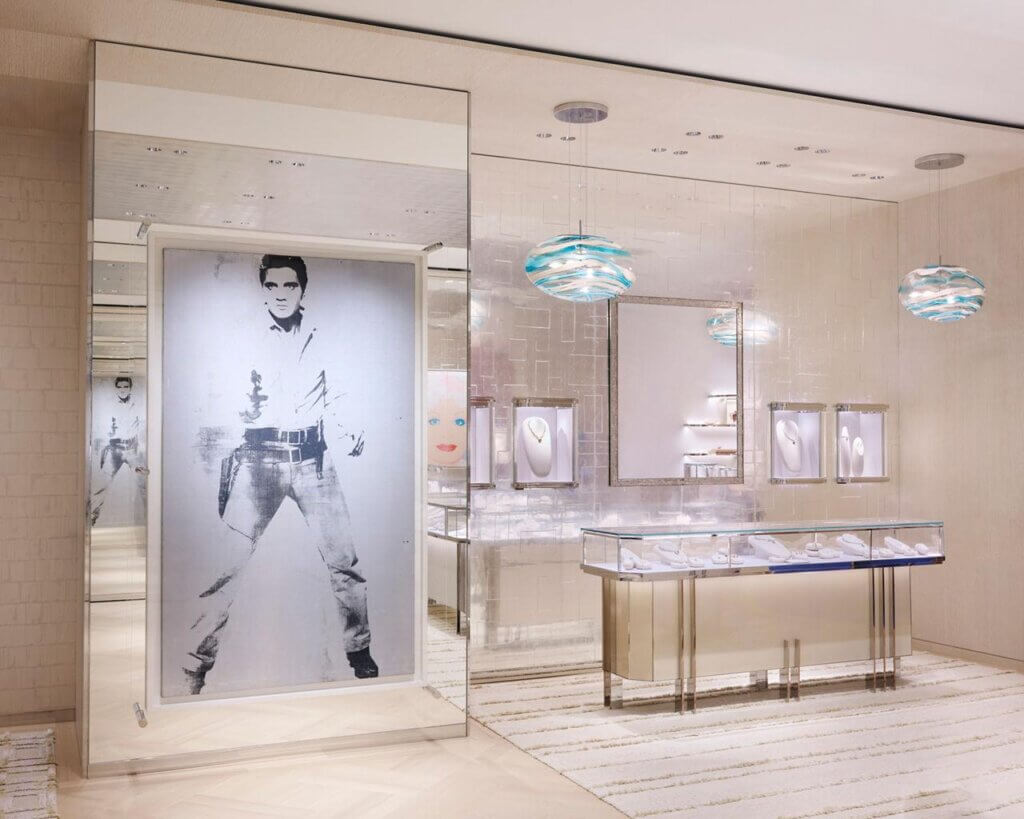
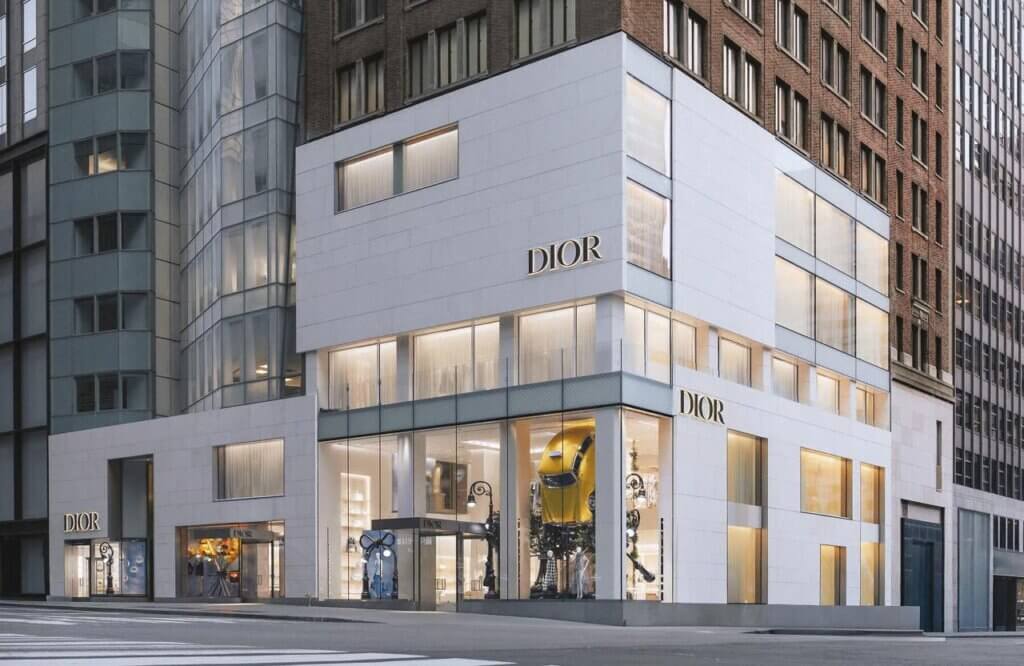
This isn’t one brand’s idiosyncratic bet. In Beijing, Dior exhibits contemporary artwork inside a sculptural building purpose-built for the display. In Tokyo, Tiffany & Co. has turned its flagship into an architectural showcase in its own right. In Paris, RH combines an art gallery, a library and a restaurant at a single Champs-Élysées address. Cartier and Hermès now routinely commission architects with museum and cultural-institution credentials for new store openings, treating the commission with the same seriousness a city might apply to a new concert hall.
Industry analysis of the 2026 flagship landscape describes this explicitly as brands treating physical retail as “cultural infrastructure” rather than points of sale — spaces designed to generate images that circulate globally on social media, with commercial return measured in brand power as much as in daily transaction volume. The operative question these spaces are built to answer isn’t whether a visitor buys. It’s whether a visitor leaves believing in the brand more than they did walking in.
Why this is a defensive strategy, not an indulgent one
It’s worth being precise about what problem this actually solves, because it isn’t primarily about impressing wealthy shoppers — it’s about surviving e-commerce. A handbag is a commodity the instant it can be purchased identically through three different channels. An hour spent inside a building designed by an architect with a museum portfolio, encountering curated art and heritage displays a screen cannot replicate, is not a commodity. It cannot be matched by a competitor’s website, no matter how well designed. This is the same logic driving Rolex’s decision to open a boutique on a Swiss mountain reachable only by cable car — competing not on convenience but on irreplicable experience, once convenience itself became table stakes across the entire category.
For brand owners and investors evaluating consumer businesses, this is the transferable insight: once a product category becomes fully commoditised in terms of access, the next competitive frontier isn’t the product. It’s the difficulty and cultural weight of the space surrounding it — something a balance sheet undervalues until a competitor builds it first and captures the imagery that defines the category for a decade.
What this means for Singapore’s own retail landscape
Singapore’s luxury retail — concentrated along Orchard Road and increasingly at Marina Bay Sands — has largely competed on the traditional metrics: floor space, brand density, tenant mix. The global shift toward flagship-as-cultural-landmark suggests a different competitive axis is opening up, one Singapore is well-positioned to pursue given its existing strength in art infrastructure, from its freeport network to its growing role as Southeast Asia’s contemporary art hub. A flagship that functions as a genuine cultural destination — not simply a well-stocked boutique — would extend logic Singapore already applies successfully elsewhere: converting infrastructure and institutional credibility into a form of retail few other regional cities could convincingly replicate.
The broader signal
The flagship store hasn’t disappeared under pressure from e-commerce, as many predicted a decade ago. It has instead absorbed the museum’s core function — a space people travel specifically to be inside, regardless of whether they leave with anything in a bag. For luxury houses, that shift represents genuine strategic clarity: when the product can be bought anywhere, the building becomes the only thing that can’t.